
A Broken Mantle Claim Was Rejected for Missing Photographs
An excavator parts dealer in Central Asia supplied a cone crusher mantle that fractured after nine weeks, well inside the expected life. The dealer filed a warranty claim with the part number and the invoice and it was rejected. The supplier asked for installation photographs, hardness and chemical certificates, feed material data and the operating hours log, none of which the dealer had collected. By the time the customer’s site was ready to cooperate again, the broken part had been cut up for scrap and the claim was unrecoverable. The evidence that wins a claim has to be gathered before the failure, not after it.
Why Most Claims Fail on Process, Not on Merit
Suppliers do not reject claims because they are dishonest; they reject them because a claim without documentation cannot distinguish a product fault from an installation or application fault. Wear part warranties almost always cover material and manufacturing defects, not application mismatch. Feeding a harder or more abrasive rock than the design basis is not a defect, and neither is running the crusher above a closed side setting limit. Read the warranty wording once, carefully, and note exactly what is excluded. Then build a claim file that proves the excluded causes were not present. That is the whole exercise.
The Pre-Failure File: Build It at Installation
The strongest claim file starts on the day the part is fitted, not on the day it breaks. Photograph the part on arrival including the casting identification and heat number, then photograph the cleaned seat and the fitted part before start-up. Record the installation date, the crusher model, the closed side setting and the torque values applied. Keep the material certificate and any hardness test result in the same file. A dealer who can produce this file settles claims in weeks; a dealer who cannot settles them in months, if at all.
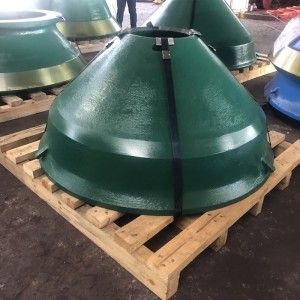
Make this a standard service. For a HP400 high manganese steel cone crusher mantle, the installation record is also the proof that the seat and the backing were correct, which is the first thing a supplier will question when a mantle cracks early.
The Failure File: What to Capture in the First 48 Hours
When a part fails, time destroys evidence faster than anything else. Stop the crusher and photograph the part in situ before removal, capturing the whole chamber, the fracture face and a scale reference. Photograph the mating surface and the opposing part as well, because wear on the bowl liner often explains the mantle failure. Do not cut, weld or move the part until the supplier has confirmed in writing that it may be disposed of. Scrapping the part before approval ends most claims immediately.
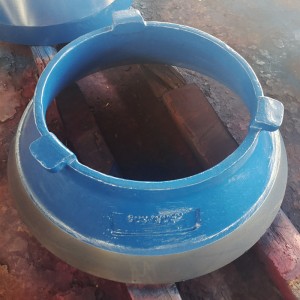
Pair the photographs with operating data. Supply the operating hours, the throughput tonnage, the feed size distribution and the rock type. A claim supported by tonnage and hours is a technical discussion; a claim supported by an opinion is an argument. A concave bowl liner supplied by part number should always be logged with the hours at which it was removed so the wear rate can be compared against the design figure.
Sample Retention and Independent Testing
Where the failure cause is disputed, cut a sample from the fracture area and retain it. A retained sample allows an independent hardness test and chemical analysis, and it is the single piece of evidence a supplier cannot argue with. Agree the sample location with the supplier before cutting so both sides accept the result. Label the sample with the part number, heat number and date and store it until the claim is closed. A sample cut without agreement is often dismissed as unrepresentative.
Writing the Claim So It Gets Read
A claim should be one page, factual and structured. Open with part number, heat number, invoice number and installation date. Then state the date of failure, the operating hours and the tonnage at failure. Then describe the observed failure in plain terms, with the photographs attached and referenced. Close with the specific remedy requested — replacement, credit or a pro-rata settlement based on the life achieved. Claims that begin with an accusation and end without a requested remedy take the longest. Ask for a pro-rata credit where full replacement is unlikely; it is usually accepted and preserves the relationship.
Turning Claims Into Better Specifications
Every claim file is also free product development data. Review claims quarterly by rock type and by crusher model and look for a pattern. If a particular application consistently produces early failures across suppliers, the specification is wrong for the application, not the part. Move that application to a different alloy or profile and the claim rate falls. Dealers who do this stop reliving the same dispute every season and start quoting the right part first time. Undercarriage requires the same discipline, where a track shoe for engineering machinery should be logged with the ground conditions and the machine hours at removal so a wear claim can be assessed on evidence rather than on recollection.
The Bottom Line
Build the claim file at installation, capture the failure in the first 48 hours and retain a sample, then ask for a specific remedy in one factual page. Dealers who wait until something breaks have already lost the claim, because the evidence was in the chamber and is now in the scrap bin.
Related Pages
- Aggregate Equipment Wholesale Purchasing Guide
- Cast Idler vs Forged Idler: Evaluating on Total Cost of Ownership
- Stable Supply of Excavator Track Shoes in Southeast Asia
Post time: Sep-18-2026