
Forty Part Numbers and Nothing on the Shelf When It Mattered
A wear parts dealer serving three mining districts stocked roughly forty different part numbers in modest quantities and considered himself well prepared. When the annual plant shutdown season arrived, he had no mantle in the size two plants were waiting for, no bowl liner to match it, and no locking nut. He did have twenty-two lines that had not moved in eighteen months. Emergency air freight on a single mantle erased the entire year’s profit contribution from six of those slow lines, and the plants remembered the stockout far longer than they remembered the years of good service. His inventory was not too small. It was misallocated, because it had been built from a supplier catalogue rather than from the machines actually working in his territory.
Inventory Is a Portfolio, Not a Catalogue
The instinctive approach to stocking is breadth: carry a little of everything so you never have to say no. In practice this spreads working capital across lines that will never earn it and leaves too little behind the lines that will. Wear parts demand is extremely concentrated, and in most dealerships a small number of part numbers accounts for the large majority of both revenue and emergency orders. The task is therefore not to decide how much to buy, but to decide which handful of items deserve depth and which should never occupy your warehouse at all.
Score Every Item on Two Axes
A simple two-axis scoring makes most stocking decisions obvious. The first axis is demand predictability: can you reasonably forecast when this item will be needed? The second is the pain of a stockout: what does it cost the customer, and therefore what does it cost you in credibility, when you do not have it? Items that score high on both deserve genuine depth, items that are predictable but low pain can be ordered against a release schedule, and unpredictable low-pain items should be ordered only when somebody has already committed to buying them. The dangerous quadrant is unpredictable and high pain, and it should drive your emergency plan.
The Installed Base Is the Only Honest Forecast
Suppliers provide sales history, but your own territory is better evidence. Walk it. Record every crusher and every excavator model in operation, the hours or tonnes each is running, whether they are owned by a plant or by a contractor, and roughly when their maintenance windows fall. A list of thirty machines with model numbers and duty cycles predicts demand better than any sales report, because it describes what will fail rather than what has already sold. Machine populations also change slowly, which means the list stays useful for years and only needs review when a mine opens or closes.
Plan-Driven Wears Deserve Depth
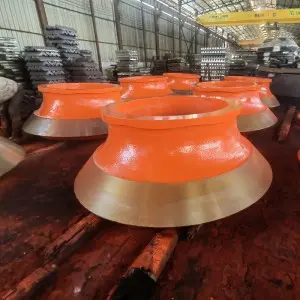
Cone crusher mantles are the classic plan-driven item. Wear is measurable, replacement is scheduled, and the customer knows weeks in advance what he needs. That predictability is exactly why stockouts are unforgivable: he ordered other parts around that plan and will not forgive a dealer who disrupts it. Holding zero stock of a mantle size that serves an active machine is not prudence, it is a decision to lose that machine’s entire wear business the first time it needs one. A core size such as this high manganese steel cone crusher mantle should be held whenever the matching machine runs in your territory.
The Matching Half Comes Too
Mantles and bowl liners wear together, and dealers who stock one without the other create a peculiar kind of failure: the customer gets his mantle, cannot install it because the concave is beyond limit, and now has both a stopped machine and a useless component in his workshop. Stocking the pair also improves your average order value and makes emergency deliveries rarer. Where a machine population justifies stocking a mantle size at all, the matching concave should be stocked with it, because half a wear set has no resale value if the customer cannot complete his changeout. Pair that commitment with the corresponding product such as this cone crusher bowl liner concave set for the same crusher family.
The Parts Nobody Stocks Until It Hurts
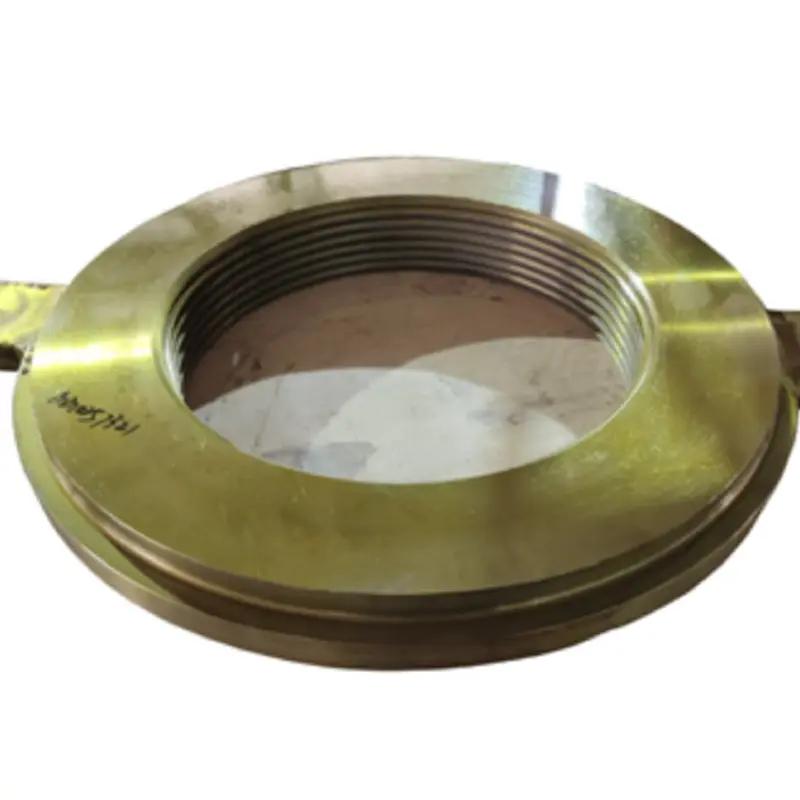
Beside the wearing surfaces sits a group of components whose failure is neither predictable nor gradual, and whose absence stops a machine just as completely. These include adjustment rings, locking nuts, covers and similar structural parts that fail through fatigue, corrosion or maintenance damage rather than through measurable wear. Because nobody tracks them on a wear curve, nobody stocks them. Identify these items for your installed base and hold at least one of each, since they are the parts that turn a routine changeout into a multi-week outage when they are missing. Items such as this cone crusher adjustment ring for common models belong in that category.
Small Consumables Protect the Whole Relationship
Threaded and clamping components deserve special mention because they are cheap, easily overlooked and absolutely capable of stopping a machine. They also have a habit of being damaged during maintenance rather than during operation, which means demand spikes precisely when somebody is already working on the crusher. Keep these at unit or two-unit depth for every model family you serve, because they cost little to hold and their absence is the fastest way to make a customer believe you do not understand his machine. Even a part as unglamorous as this locking nut for MP series cone crushers can decide whether you are seen as a supplier or a partner.
Undercarriage Runs on Hours, Not Calendar
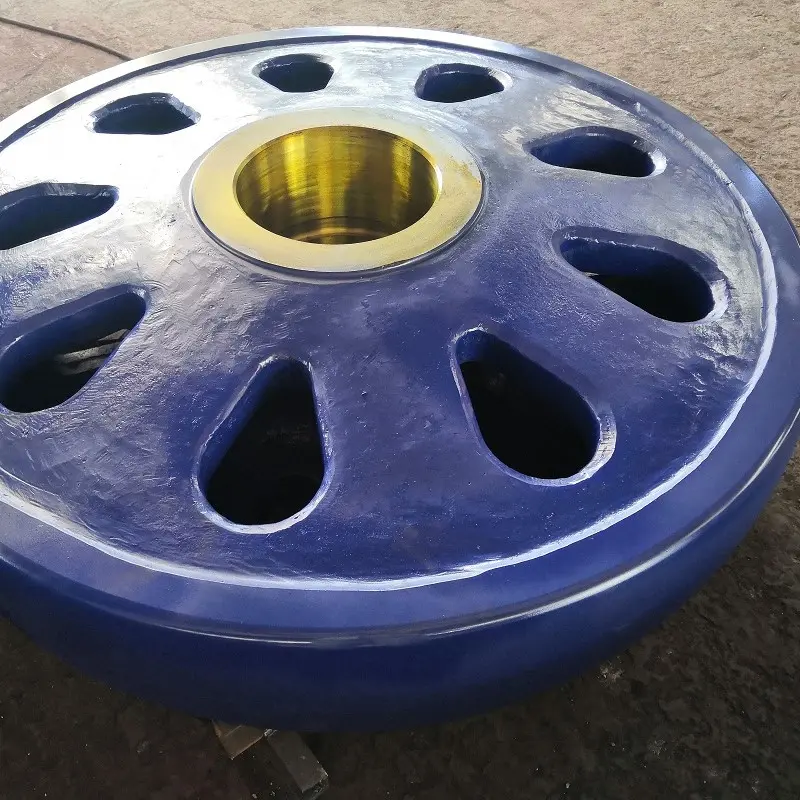
Undercarriage components wear against machine hours and ground conditions rather than against a maintenance date, which changes how they should be stocked. Idlers, rollers and similar parts fail on machines with high hours and aggressive terrain, so the forecast driver is utilisation rather than season. Build a simple database of machine hours against type and service history, and plan according to it. A fleet running long shifts in abrasive ground will consume undercarriage components on a schedule you can forecast far more precisely than most dealers bother to try. Components such as this front idler for engineering machinery should then be stocked against that utilisation curve.
Decide Deliberately What You Will Not Stock
Every dealership also needs an explicit no-stock list. Low population machines, specialised sizes serving a single unit and heavy structural items that can only be sold once every few years should all be quoted from factory lead time rather than held. Say this honestly to customers at quoting time instead of pretending to have stock, because a customer who knows your genuine lead time can plan around it, while a customer who discovers the delay later simply moves to whoever answers the phone next. Publish your held stock list and update it every quarter.
Review Quarterly Against Reality
Set a fixed review date. Check what sold, what you air-freighted, what expired in the rack and which machines entered or left the territory. Move stock between quadrants rather than adding more lines. Dealers who run this review consistently carry less total inventory but stock out less often, which is the whole point of building the matrix rather than filling the warehouse.
Related Pages
- Aggregate Equipment Wholesale Purchasing Guide for Crusher Wear Parts
- Cast Idler vs Forged Idler: Evaluating Purchasing Decisions on TCO
- Stable Supply of Excavator Track Shoes in Southeast Asia
Post time: Sep-29-2026