
In the global mining, construction, and demolition industries, equipment uptime is critical to project success and profitability. As one of the most vital wear components for excavators, the quality and supply stability of excavator undercarriage parts (such as track shoes) are non-negotiable. When sourcing these critical components, you face a key decision: partner directly with an excavator undercarriage parts factory or source through a trading company?
This choice impacts not only your procurement costs but also long-term operational efficiency and risk control. From the perspective of global buyers, this article analyzes the pros and cons of both models to help you make the most beneficial decision.
Direct Factory Sourcing: Control the Source, Maximize Value
Cost Advantages & Price Transparency
The most immediate benefit is cost savings. Eliminating trader markups gives you access to more competitive ex-factory prices. For buyers sourcing large volumes of track shoes and other undercarriage parts, these savings are substantial and directly boost project profit margins.
Deep Customization & Technical Collaboration
Factories possess core production technology and R&D capabilities. When your operating conditions require custom solutions—such as specialized materials (Hadfield steel or alloy steel), unique dimensions, or reinforced designs for excavator undercarriage parts—direct communication with the factory’s technical team ensures your requirements are accurately understood and efficiently fulfilled. This technical synergy is difficult for trading companies to match.
Source-Level Quality Control Assurance
Working directly with factories allows you to trace the entire production process. From raw material selection, casting, and heat treatment to final machining and quality inspection, you can request detailed QC reports and certifications. This transparency builds confidence in product quality and reduces risks at the source.
Trading Companies: Convenient but With Hidden Risks
Trading companies act as intermediaries, offering one-stop services by integrating resources.
Procurement Convenience & Product Integration
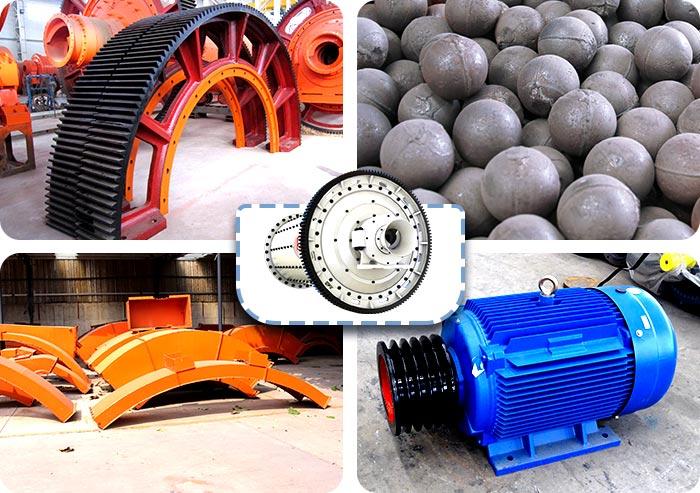
Trading companies excel in broad product lines. If you need to simultaneously source excavator undercarriage parts, crusher wear parts, ball mill components, and other products, a capable trading company can consolidate resources across multiple factories, simplifying your procurement workflow and reducing communication costs.
Potential Risks & Challenges
This convenience comes with significant risks:
- Lack of Transparency: You cannot access the production source directly; your understanding of processes and quality control depends entirely on the trader’s account, risking information distortion or concealment.
- Layered Markups: Trading companies require profit margins, inevitably increasing your final procurement cost.
- Weak Technical Support: For complex technical issues or deep customization, traders often act only as messengers—leading to inefficient communication and a lack of fundamental solutions.
- Supply Chain Vulnerability: Traders do not manufacture; their supply stability depends on upstream factories. During market fluctuations or capacity shortages, your order priority may not be guaranteed.
Decision Guide: At-a-Glance Comparison
To help you evaluate clearly, we’ve summarized key decision criteria:
| Evaluation Dimension | Excavator Undercarriage Parts Factory | Trading Company |
|---|---|---|
| Core Strengths | Cost advantages, technical customization, quality control | Procurement convenience, product integration |
| Ideal Scenarios | Large-volume orders, customization needs, long-term quality focus | Small-batch, multi-category, ad-hoc purchases |
| Communication Efficiency | Direct, efficient, professional | Potential delays or information distortion |
| Risk Level | Low (requires thorough factory vetting) | High (quality, supply, and cost risks) |
Conclusion: The Strategic Choice for Procurement
Ultimately, choosing between factories and trading companies depends on your procurement volume, technical requirements, and risk appetite.
For global buyers seeking long-term stable operations, strict quality and cost control, and sufficient order volumes, establishing direct partnerships with reputable excavator undercarriage parts factories is a strategically sound choice. It delivers direct economic benefits while providing robust support for equipment efficiency through technical collaboration and source-level quality control.
Through rigorous supplier vetting (online or on-site inspections) and clear communication, you can mitigate potential risks and turn supply chain advantages into tangible market competitiveness.
Post time: Jul-06-2026