
A maintenance buyer at a copper operation wakes up to a stopped cone crusher because the one dust collar nobody tracked has finally worn through, while three pallets of bowl liners for a different machine gather dust in the same warehouse. This gap between a real cone crusher liner consumption plan and the shelving reality is what costs sites unplanned downtime and ties up working capital at the same time. Without a written consumption rate, a single late ocean vessel turns a planned changeout into a 48-hour emergency repair at premium freight.
Why a Mining Site Runs Out of One Liner While Others Sit for a Year
The easiest way to lose a weekend is to trust the rack instead of the run hours. Most sites stock by purchase order, not by predicted wear. A cone mantle that relines every 800 operating hours will strand cash if you buy it on the same cadence as a part that changes once a year, and a small sleeve will vanish completely if nobody owns its reorder point.
The fix is a consumption model that starts from the machine, not the catalogue. A four-cone, two-SAG site is the standard shape we model here, because it already contains the two failure patterns: high-turn liners that starve, and slow-movers that overstock. Write the model before you place the next foundry order, not after the line stops. A dealer who can show the buyer the maths also wins the call-off contract instead of just the spot order.
How to Pull Twelve Months of Reline Records That Actually Mean Something
A clean consumption rate is only as good as the log behind it. Pull at least 12 months of reline records for every machine, and insist each entry carries the part number, the installed hour reading, the removed hour reading and the tonnes processed between. A note that says changed liner with no hour meter value is worthless for forecasting, and a spreadsheet full of those notes is worse than none because it looks complete.
From those records you compute two numbers per part: hours per set and tonnes per set. Averaging across 12 months smooths out the two shutdown months that would otherwise distort the rate. If a machine ran 6000 operating hours last year and consumed 7 mantle sets, the implied rate is roughly 857 hours per set, close enough to the 800-hour design figure to trust. Keep the raw log attached to the model so the next reviewer can see the outliers.
The SAG mill shell liners move on a different clock. A high-discharge-end liner that is only swapped during a planned outage will look like zero consumption for months, then spike, so it must be modelled by outage, not by week. Treat it as a project line, not a shelf line.
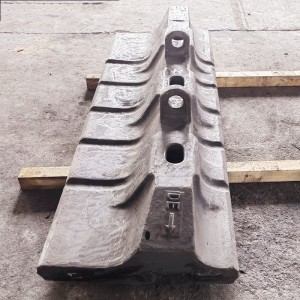
Metso Outotec SAG mill 6.7×3.5 high discharge end shell liner (N03116440) for planned outage replacement is exactly the kind of part that hides in the log until the shutdown arrives. In the consumption model it earns a low turnover tier, yet it still needs a confirmed call-off window because its lead time is the longest in the set and a missed melt slot pushes the whole outage.
What Hours per Set Tells You About the Next 6000 Operating Hours
The point of the rate is the forecast. Take the next 6000 operating hours as the planning horizon and divide by the hours-per-set figure for each part; that gives the sets you will burn through, before you add a single safety buffer. A bowl liner at 800 hours per set over 6000 hours implies 7.5 sets, which you round up to 8 and then protect with stock.
A 40-part set on a big secondary cone is the other end of the scale. Forty pieces per set means a single reline touches more stock-keeping units than a small site owns in total, so the forecast has to track each piece, not the assembly as one line. Break the set into its own consumption rows if you want the reorder point to fire correctly. A missing lock nut in a 40-part set stops the crusher just as hard as a missing mantle.
5-1/2 cone crusher bowl liner wear parts for mining equipment from Wujing is a good example of a mid-size liner with a predictable rate. In this model it sits in the B tier: frequent enough to forecast tightly, but not so fast that it justifies floor stock of every size at once, so it rides the call-off rather than the shelf.
Setting a Reorder Point at an 8-Week Sea Lead Time
A reorder point is not a guess; it is arithmetic. Set it at the consumption during the lead time plus safety stock. With an 8-week sea lead time on foundry castings, a fast mantle that burns 1 set per 800 hours on a machine running 24 hours a day will consume about 1.5 sets during the transit window alone, before the crusher touches the next one.
Add 2 sets of safety stock for any A-tier liner so a late vessel or a short foundry run never stops the crusher. The reorder point then becomes when on-hand plus in-transit drops below 3.5 sets, release the next purchase order. That single rule removes the panic buy at triple freight. Write it into the dealer’s stock policy so a new buyer inherits the discipline instead of relearning it.
4.25 ft cone crusher concave bowl liner wear parts (4830-4071) for secondary crushing belongs in this lead-time maths because its casting window is the same ocean freight the rest of the plant rides. Its reorder point should be reviewed together with the mantle it runs alongside, not in isolation, since both depend on the same crusher hours.

Should You Split Liners Into A, B and C Stocking Tiers?
The short answer is yes, because a flat stocking rule wastes money on the wrong parts. Classify every liner by annual usage value and turnover. A-tier parts are the fast, stop-the-line items: mantles, concaves and the small collars that vanish. C-tier parts are the once-a-year shells and slow liners that only need a confirmed call-off, not a pallet on the floor.
The risk in skipping ABC splits is that buyers over-order the quiet parts and under-order the loud ones, which is precisely how a site runs out of a dust collar while three bowl liners age. A simple rule keeps it honest: if a part turns more than 6 times a year, it is A; between 2 and 6 is B; below 2 is C. The boundary parts get reviewed each quarter so they do not drift.
HP500 cone crusher liners concave bowl liner wear parts for high-output circuits typically land in the A tier on a busy concentrator, which means it earns both floor stock and a hard reorder trigger rather than a casual order when remembered. That is where the model pays for itself in uptime.
Agreeing a 90-Day Call-Off Schedule With the Foundry
A consumption model only pays off if the foundry can meet it. Negotiate a 90-day call-off schedule against a frozen annual forecast, where you commit the volume but release specific part numbers as the model triggers them. This keeps the foundry’s pattern ready without you owning the full inventory up front, which protects both cash and lead time.
Put the C-tier long-lead items on the firm part of the schedule so an outage never waits on a fresh melt. The A and B tiers can flex within the 90 days as the hour meters move. Re-confirm the cast dates at 60 days out, not at 30. A fortnight is too short to recover from a pattern conflict at the foundry.
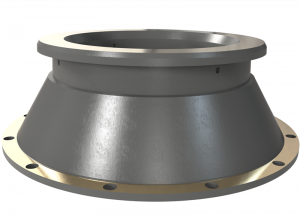
HP400 cone crusher bowl liner concave wear parts for quarry and mining service fits the call-off model well because its demand is steady enough to firm up a quarter ahead yet flexible enough to shift between the B and A boundary as feed changes through the season.
Reviewing the Consumption Model Every Three Months
The model is not a one-time spreadsheet. Review it every 3 months against the actual hour meters and the actual consumption. Feed grade shifts, a new crusher setting or a throughput push will all move the hours-per-set figure, and the reorder point should follow within the quarter rather than waiting for the annual budget cycle.
A quarterly review also catches the slow creep where a rare part quietly becomes frequent after a plant upgrade. Close the loop by feeding the revised rates back into the next 90-day call-off so the foundry plans against reality, not last year’s guess. The dealer who runs this loop becomes the buyer’s default supplier.
A Consumption and Reorder Checklist for the Next Foundry Order
Use this short list when you sit down with the maintenance log and the foundry quote, and keep it with the purchase order so the next buyer can follow it.
- Pull 12 months of reline records with installed and removed hour readings for every machine.
- Compute hours per set and tonnes per set for each liner and sleeve before forecasting.
- Forecast the next 6000 operating hours and round the sets up, never down.
- Set the reorder point at 8-week lead time consumption plus 2 sets of safety stock for A-tier parts.
- Split every part into A, B or C by annual turnover and stock accordingly.
- Agree a 90-day call-off schedule with the foundry and re-confirm cast dates at 60 days.
- Review the whole model every 3 months against the live hour meters and actual usage.
The conclusion is blunt: a site that models cone and mill liner consumption from run hours, sets reorder points on the real sea lead time, and reviews quarterly will stop losing weekends to a missing collar while clearing the capital tied up in liners nobody needed. Stock by the machine’s behaviour, not by the purchase order.

Related Pages
- Cast Idler vs Forged Idler: Evaluating on Total Cost of Ownership
- Stable Supply of Excavator Track Shoes: Selecting a Reliable Partner
- Aggregate Equipment Wholesale Purchasing Guide
Post time: Nov-12-2026