
As Russia’s aggregate industry continues to expand, jaw crushers serve as the core primary crushing equipment in sand and gravel production lines. Jaw dies and wedges are high-frequency wear parts that directly impact production line uptime. Most Russian aggregate companies rely on imported channels for these components, yet face persistent challenges including跨境 logistics delays, specification mismatches, working condition adaptation issues, and inadequate inventory planning — leading to supply interruptions and unplanned downtime. Establishing a robust import supply chain management system with comprehensive stability measures has become essential for Russian aggregate enterprises to control maintenance costs and sustain production output.
1. Existing Pain Points in Russian Aggregate Companies’ Jaw Die & Wedge Import Supply Chains
Russian aggregate production is predominantly concentrated in open-pit mines and large-scale sand and gravel processing parks. Jaw crushers operate under heavy loads continuously, making jaw die and wedge replacement a high-frequency necessity with stringent timeliness requirements. However, traditional import procurement models present multiple shortcomings.
First, material and model mismatch is prevalent. The market offers jaw dies and wedges in various materials including standard manganese steel, high chromium iron, alloy steel, carbon steel, TiC ceramic inserts, and chromium alloy inserts. Component parameters vary across different brands of deep cavity reversible hammer crushers, vertical crushers, and heavy-duty alloy crushers, leading to incorrect model selections or materials unsuitable for local working conditions.
Second, cross-border logistics and customs clearance uncertainties arise. Long-distance sea and land transport are affected by weather, port inspections, and documentation compliance. Delays are common, compounded by Russia’s complex import declaration procedures, further extending lead times.
Third, settlement and cooperation risks are prominent. Cross-border payment channels are restricted, exchange rate fluctuations are significant, some suppliers lack delivery discipline, and emergency orders cannot be expedited.
Fourth, inventory planning gaps exist. Most enterprises lack scientific stock mechanisms, purchasing parts only after damage occurs — inevitably leading to passive production line shutdowns.
2. Proactive Supplier Screening and Qualification Control: Building a Solid Supply Foundation
A stable import supply chain begins with rigorous supplier selection — the first line of defense for consistent jaw die and wedge supply. Russian aggregate companies should focus on verifying comprehensive supplier capabilities and product adaptability during early procurement stages.
First, confirm whether the supplier offers a complete product portfolio capable of Batch supplying dedicated jaw dies and wedges for jaw crushers, while also compatible with cone crushers, impact crushers, sand washers, feeders, vibrating screens, and other full-series equipment wear parts — enabling one-stop multi-category supply.
Second, verify manufacturing processes and material standards. Prioritize manufacturers with standardized casting workflows and professional inspection equipment. Product materials should cover standard manganese steel, high chromium iron, alloy steel, carbon steel, as well as TiC ceramic inserts and chromium alloy inserts — strictly matching the impact resistance and high-wear requirements of Russian mining aggregate crushing conditions.
Simultaneously, prioritize partners with scaled production capacity and regular stock availability for standard models. Establish clear production cycle rules for customized parts and sign long-term framework agreements to lock in order priority, avoiding peak-season delivery delays. Additionally, verify the supplier’s international export experience — mature cross-border order handling, packaging logistics, and after-sales support systems, along with familiarity with Russian import documentation requirements, significantly reduce communication errors and customs clearance obstacles.
3. Standardized Model and Material Specification: Eliminating Adaptation-Related Supply Risks
Precise matching of jaw dies and wedges is the core prerequisite for supply chain stability. Incorrect models or materials not only waste procurement budgets but directly halt production lines. Russian aggregate enterprises should establish internal parts specification archives, uniformly recording model parameters, original jaw die and wedge dimensions, mounting interfaces, and load-bearing data for all jaw crushers, deep cavity reversible hammer crushers, and vertical crushers.
Place orders strictly according to equipment档案 parameters, rejecting模糊 selection. Simultaneously, clearly specify material requirements: choose high chromium iron or TiC ceramic insert materials for high-hardness ore conditions, standard manganese steel or alloy steel for常规 aggregate crushing, and chromium alloy insert reinforced versions for heavy-impact scenarios.
Establish material acceptance standards upon delivery — verify material test certificates, dimensional tolerances, and surface casting quality, rejecting defective items with pores, cracks, or deformation. Through standardized model management and material customization, fundamentally reduce misordering, wrong shipments, and installation failures, ensuring parts are always replaceable and producible.
4. Multi-Channel Logistics and Customs Planning: Compressing Cross-Border Delivery Cycles
Cross-border logistics and customs efficiency directly determine the timeliness of jaw die and wedge import supply. Russian aggregate companies should build multi-route logistics backup plans, integrating sea freight and cross-border land transport channels, flexibly selecting based on order urgency. Use sea containers for routine bulk replenishment to control overall logistics costs; activate express land routes for emergency restocking to shorten transit time.
Simultaneously, engage professional cross-border logistics providers familiar with Russian port regulations. Standardize moisture-proof packaging and reinforce large castings with sturdy protection to avoid transit damage.
During customs clearance, prepare complete documentation in advance — including product names, specifications, material certificates, packing lists, and commercial invoices — strictly following Russian import commodity codes and declaration norms. Cooperate with third-party inspection procedures to minimize detention caused by incomplete information or declaration discrepancies. Establish real-time shipment tracking mechanisms to monitor transportation, customs declaration, and release milestones, accurately predicting arrival times and reserving sufficient buffer for parts replacement scheduling.
5. Optimized Settlement Models and Long-Term Agreements: Reducing Cooperation Volatility Risks
Settlement stability is a vital pillar for sustaining long-term import supply chains. Given the characteristics of Russian cross-border trade settlement, aggregate enterprises should select compliant and efficient payment channels, lock in fixed settlement exchange rate periods, and avoid cost increases and payment delays caused by short-term exchange rate fluctuations.
Sign annual long-term procurement framework agreements with core suppliers, stipulating annual purchase volumes, tiered pricing, fixed delivery standards, and emergency order response mechanisms. Include provisions for shortage replenishment, delay compensation, and quality returns within contracts to secure supply stability through contractual commitments.
Abandon fragmented spot procurement models. Lock in production capacity quotas through long-term cooperation, ensuring suppliers prioritize your enterprise’s orders even during industry peak seasons — achieving stable jaw die and wedge supply on demand.
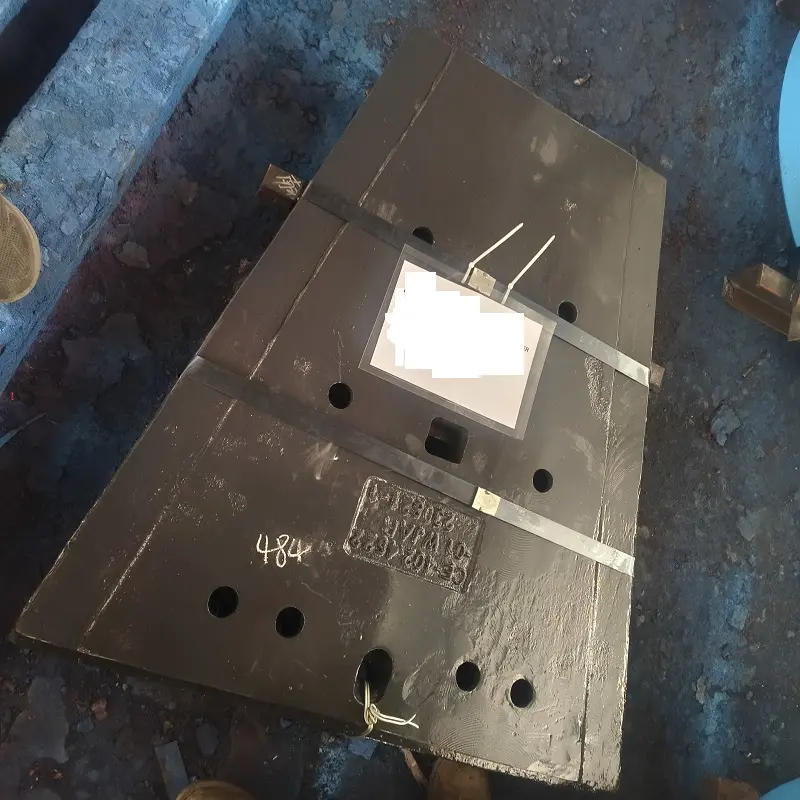
6. Scientific Spare Parts Inventory Management: Building a Self-Sustaining Buffer System
Relying solely on timely import deliveries cannot fully mitigate supply chain突发 risks. Russian aggregate enterprises should establish tiered spare parts inventory management systems. Based on equipment quantity, average wear cycles, and replacement frequency, set safety stock thresholds. Maintain fixed quantities of standard-model jaw dies and wedges as permanent inventory. For special customized items, predict consumption pace in advance and place orders proactively.
Classify storage between common standard models and niche customized items, implementing moisture-proof and rust-proof management to ensure inventory parts are always ready for use.
Simultaneously, establish regional shared parts coordination mechanisms — multiple aggregate enterprises in the same region can collaborate on bulk procurement and share inventory adjustments. When one company faces urgent part failure, temporary nearby allocation fills the gap during import logistics lead times, maximizing prevention of unplanned production line stoppages.
RussianAggregatePartsImport #JawDieWedgeProcurement #JawCrusherWearParts #MiningPartsSupplyChainManagement #HighChromiumIronCrusherParts #TiCCeramicInsertParts #RussianCrushingEquipmentSupply #AggregatePlantSparePartsManagement #CrusherPartsCrossBorderImport #WearPartsInventoryPlanning
Post time: Jun-02-2026