
A maintenance crew once spent 48 h in a paid Barmac B7150 shutdown, then stripped the whole chamber again because two bolt holes sat 2 mm out and the top plate rocked on its seat. The steel was fine; nobody had trial-assembled the parts before the torque gun came out. A dry fit check is the cheap, unglamorous step that catches this. You set each plate, sleeve and bearing in place without final fasteners, prove the geometry with a gauge pin and a 0.5 mm feeler, and only then tighten to the stated value. This guide gives dealers a repeatable routine, the measured points to record and a clear rule for when a part goes back in the crate.
Why Does a Dry Fit Check Pay for Itself in a Shutdown Window?
Downtime on a cone or VSI crusher is billed by the hour, and a reline that has to be re-opened costs twice. A plate forced into a misaligned hole damages the bolt, the boss and the operator’s schedule at once. The dry fit moves that discovery from the running machine to the bench, where a spare part can be swapped in minutes. It also creates a record you can defend if the casting is later disputed. Wear plates, sleeves and bearings rarely arrive with a fit certificate, so the first proof happens on your floor. For a dealer supplying mining maintenance buyers, the check protects a 48 h window that was booked weeks ahead. A clean crusher restart is the payoff.
What Tools and Records Should Be on the Bench?
Keep the kit small and traceable. You need a gauge pin sized just under the bolt shank, a feeler gauge, a tape, a marker and one signed sheet. Log the machine serial, each part number and the position number before anything is set down. Record 8 measured points per assembly: four hole alignments and four seat gaps. A 2-person check works best, one person seating the part and one reading the gauge. Photograph each measurement with the part number visible so the file writes itself. Work on a clean, level pad, because a plate resting on grit will read as a rocking seat. That discipline turns a visual impression into evidence you can hand to a supplier.
How Do You Trial-Assemble the Plates and Prove Bolt Hole Alignment?
Start with the pieces that define the chamber. Offer them up dry, with no bolts, and check that each seat lands flat before you reach for the gauge. A plate that rocks before a fastener is fitted will never pull true under torque.
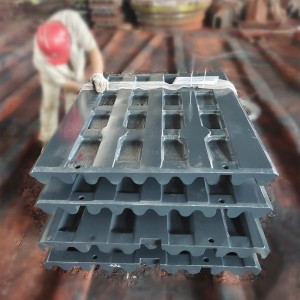
The MM0401066 cavity wear plates for Barmac B7150 VSI crusher set the reference geometry for a VSI chamber. Place them in position and pass the gauge pin through every hole; a pin that will not pass at 2 mm of offset means the plate must be rotated or replaced before any fastener goes in. Treat the first plate as the datum and fit the rest around it.
The MM1173845 top plate for Barmac B7150 VSI crusher is where rocking usually shows up. Set it on its seat and sweep the 0.5 mm feeler around the contact band; any gap that admits the blade means the plate does not sit true and must not be torqued down. Mark the high spot with the marker before you lift it off.
Checking the Sleeve and Roll Bearing on a CJ615 Jaw Crusher
Jaw crusher internals are easier to fit wrongly than to spot by eye, so the trial assembly has to include orientation as well as alignment. A part that is upside down can still pass a hole check, which is why the rotation test matters here.
The 868-0727-00 sleeve for CJ615 JM1511 jaw crusher belongs in the trial assembly at the shaft seat. Confirm the sleeve orientation against the drawing, then verify the bore lands square so the eccentric turns freely by hand before the housing closes. Note the orientation on the sheet, not just the pass.
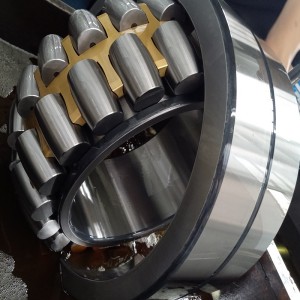
The CJ615 roll bearing 24176 for jaw crusher gets the same treatment at its seat. Seat it dry and rotate the inner ring; any bind or tilt at this stage will turn into heat and early failure once the crusher runs. Record the feel as a pass or fail beside the part number.
Where Does the Supertooth Jaw Plate Fit the Sequence?
The last plate in is often the one nobody re-checks, which is why it earns its own line on the checklist. Fit it after the chamber plates so any interference with the cheek or seat shows up while there is still time to swap.
The 600-2148E and 600-2149E Supertooth 18 Mn jaw plates for Terex XA400 should be trial-fitted at the jaw seat with the gauge pin before final torque. Because the 18 Mn profile is dressed to a tooth pattern, confirm the plate is not flipped left for right. A wrong hand will pass a hole check but wear unevenly from the first shift.
A Numbered Dry-Fit Checklist You Can Hand to the Crew
Print this list and tick it at the machine, not from memory afterwards. Each line is a gate: no tick, no torque.
- Confirm the machine serial and each part number against the drawing and the delivery note.
- Set the 3 plate positions in place dry, with no final fasteners fitted.
- Pass the gauge pin through every hole and note any 2 mm misalignment.
- Sweep the 0.5 mm feeler around each seat and record the gap.
- Verify sleeve orientation and roll bearing fit by hand rotation.
- Complete a 2-person visual and tactile sign-off across 8 measured points.
- Torque to the stated value only after every line above passes.

When Should You Reject a Plate and Open a Claim?
If any hole needs force or any seat admits the feeler, stop. Do not machine a boss in the field to make a part fit; field grinding voids the warranty and hides the real tolerance problem. Photograph the gap with the part number in frame and raise the discrepancy inside a 15-day claim window. Keep the signed sheet and photos for 90 days so a repeat fault can be traced to one casting batch. Share the measured points with the supplier, not a short email saying the part does not fit.
A dry fit check is not extra work; it is the difference between a reline that holds and one that is re-opened. Prove the holes, prove the seats, record 8 points and torque only after a 2-person sign-off. Do that and the machine starts once, on schedule.
Related Pages
- Cast Idler vs Forged Idler: Evaluating on Total Cost of Ownership
- Stable Supply of Excavator Track Shoes: Selecting a Reliable Partner
- Aggregate Equipment Wholesale Purchasing Guide
Post time: Nov-16-2026