
When international buyers source castings for jaw crushers, cone crushers, impact crushers, ball mills and related mining equipment, the core demand is precise matching between material grades and actual working conditions. Top global export-oriented suppliers have established a complete material matrix ranging from standard manganese steel, alloy steel and high-chromium iron to carbon steel, with stable mass production capacity for composite wear parts embedded with TiC, ceramics and chromium alloy inserts.
Standard high manganese steel dominates high-impact crushing applications (such as primary jaw crusher jaw plates) due to its excellent work-hardening behavior. High-chromium cast iron delivers superior wear efficiency in fine grinding and high-abrasion environments, including mill liners and impact crusher blow bars. In recent years, the widespread use of microalloying and composite material technologies has continuously expanded the toughness limits of alloy steel and carbon steel substrates. Advanced solutions such as TiC particle reinforcement and ceramic insert technology resolve the long-standing conflict between high hardness and fracture resistance that limited traditional single materials. This material capability covering standard to high-end custom solutions is a key reason why global buyers prefer integrated, full-range suppliers.
Industrial Clusters & Vertically Integrated Manufacturing Ecosystem
Leading hubs for global wear-resistant casting exports rely heavily on highly concentrated foundry industrial clusters. A fully coordinated upstream and downstream supply chain – covering pig iron smelting, medium-frequency induction melting, sand casting / lost foam casting, heat treatment, CNC precision machining and non-destructive testing – greatly shortens production cycles and reduces marginal costs.
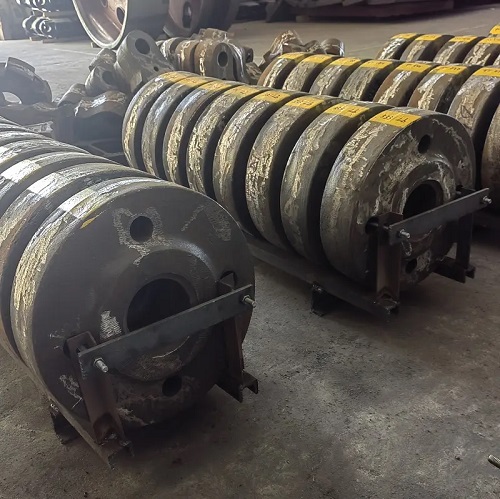
Large crusher wear parts (e.g., deep-chamber reversible hammer crusher hammers, cone crusher concave and mantle) typically weigh from dozens of kilograms to several tons, requiring heavy-duty foundry equipment (large bogie hearth furnaces, resin sand production lines) and advanced machining centers (heavy-duty vertical lathes, boring and milling machines). Export-capable manufacturing clusters often possess heavy-duty casting capacity of tens of thousands of tons per year, supporting mixed-line production of structural components for sand washing machines, feeders, vibrating screens and high-precision wear-resistant castings. This vertical integration ensures on-time delivery for bulk orders and amortizes costs for high-end testing equipment (spectrometers, UT/MT flaw detectors) through economies of scale, maintaining price competitiveness while guaranteeing consistent quality.
Alignment with International Standards & Customized Engineering Capabilities
In Google SEO search patterns and overseas buyer decision journeys, compliance with ASTM, DIN, JIS or ISO standards represents a high-frequency long-tail keyword for supplier screening. Mature export-focused wear casting industries implement internationally aligned chemical composition control and mechanical property testing systems, providing complete pre-furnace spectral analysis, hardness gradient reports and metallographic structure charts.
More importantly, professional engineering customization response is critical. Ore hardness, abrasion index (Ai value) and crushing processes vary widely across global mining operations, requiring buyers to optimize tooth profiles, cavity shapes or insert layouts for specific rock types. Competitive export suppliers maintain in-house teams for CAD/CAE casting simulation and wear analysis, supporting reverse engineering and service life prediction for vertical shaft crushers and high-alloy crusher wear parts, rather than only offering simple pattern-based manufacturing. This strategic shift from “selling castings” to delivering complete wear solutions significantly strengthens customer loyalty in high-end mining markets.
Total Lifecycle Cost Advantage & Supply Chain Resilience
International mining buyers increasingly evaluate competitiveness based on total lifecycle cost (TLC) rather than simply comparing FOB unit prices. A key export advantage lies in extended service life – by optimizing water toughening, quenching and tempering processes and composite insert technologies, the service life of jaw plates, liners and similar components can be improved by 30% to over 200%, reducing downtime for replacement and lowering inventory holding costs.
Meanwhile, supply chain resilience supported by global logistics and after-sales response represents a core competitive factor. Major export hubs are strategically located near deep-water ports, with professional anti-corrosion packaging and optimized container loading capabilities, covering urgent orders for small to medium parts as well as break-bulk shipments for complete lines (crushers, screens). Stable sea and land freight performance to mining-intensive regions including Russia, Southeast Asia, South America and Africa greatly reduces supply disruption risks for buyers.
Synergistic Effects Between Equipment Segmentation & Casting Adaptation
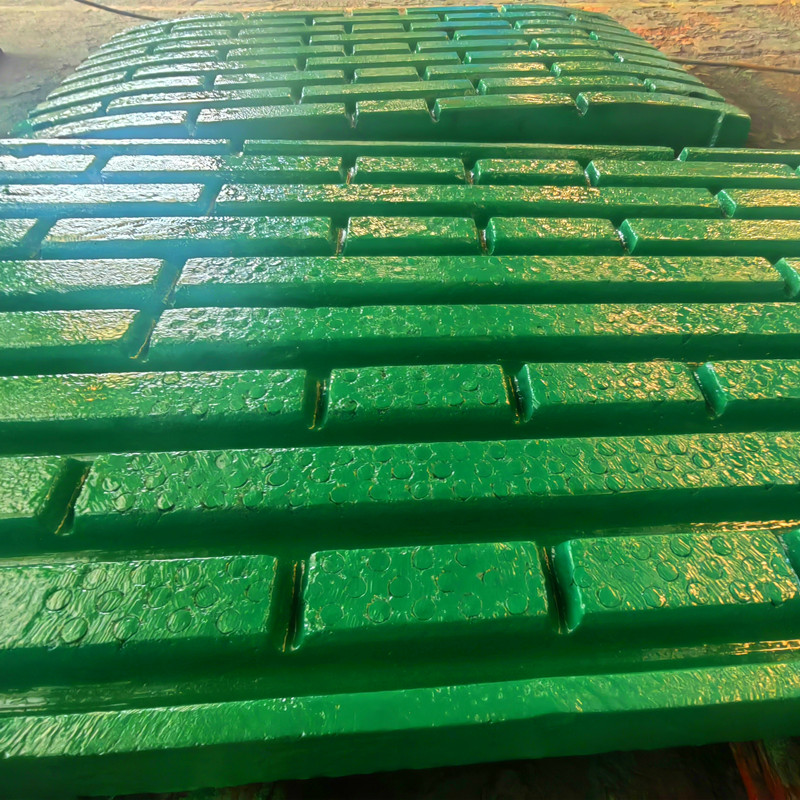
Beyond pure wear material exports, a second major advantage comes from the synergistic export of crusher mainframes and wear parts. Suppliers capable of designing complete equipment – including jaw crushers, cone crushers, impact crushers, deep-chamber reversible hammer crushers, vertical shaft crushers, high-alloy crushers, sand washing machines, feeders and vibrating screens – possess deeper insights into stress distribution and wear mechanisms of matching wear parts (Jaw Plate, Concave, Mantle, Blow Bar, Hammer).
This closed-loop model of mainframe process driving component design ensures exported wear parts outperform third-party generic parts in assembly accuracy, weight balance and uniform wear performance, creating a hidden competitive advantage for large EPC projects and mining operators.
Conclusion
Overall, the global export advantage of mining wear-resistant castings does not rely on one-dimensional low-price competition, but on a systematic barrier built on material science expertise, heavy manufacturing foundations, international standard compliance and engineering customization services. For overseas buyers seeking long-term stable partnerships, identifying suppliers with proven track records in high manganese steel, high-chromium iron, alloy steel and composite insert applications, supported by complete machine collaborative R&D capabilities, is critical to optimizing capital expenditure and operational expenditure.
Post time: Jul-15-2026