
Common Pitfalls in Import Negotiations for Crusher Upper Frames by Middle East Aggregates Companies: A Mining Avoidance Guide
The deep integration of wearable technology and safety apparel is reshaping safety standards for mining operations. Meanwhile, continuous infrastructure expansion in the Middle East has driven a surge in import demand for core components such as crusher upper frames among aggregates businesses. However, information gaps, unclear standards, and contractual oversights in procurement negotiations often lead to excessive costs, project delays, and unexpected equipment failures.
Table of Contents
- Core Industry Trends: Wearable Technology in Safety Apparel
- Application Value of Wearable Safety Apparel in Mining & Aggregates Scenarios
- Key Mistakes in Import Procurement of Crusher Upper Frames for Middle East Aggregates Companies
- Practical Guide to Avoiding Pitfalls in Upper Frame Procurement Negotiations
- Quality Acceptance & Long-Term Operation & Maintenance Essentials
- Outlook on Future Industry Development
1. Core Industry Trends: Wearable Technology Integrated into Safety Apparel
Supported by mature IoT, sensors, positioning, and communication technologies, wearable solutions are upgrading safety apparel toward intelligence, active early warning, and data-driven management, making them standard equipment for mining, quarries, and heavy-duty operations.
Real-Time Health & Environmental Monitoring
Automatic alerts are triggered under high temperature, excessive dust, or toxic gas conditions, reducing risks of heatstroke, poisoning, and collapse.
Positioning Tracking & Electronic Fencing
Smart Communication & One-Touch SOS
Improved Lightweight & Durability
Products are abrasion-resistant, tear-resistant, and easy to clean, meeting harsh mining conditions.
Data-Driven Safety Management
2. Application Value of Wearable Safety Apparel in Mining & Aggregates Scenarios
- Reduce accident rates and cut downtime losses and compensation costs
- Comply with local safety supervision and international compliance requirements to avoid penalties
- Improve employee satisfaction and operational efficiency
- Enable traceable safety data for auditing and management optimization
- Collaborate with crushers, screens, and feeders to build an intelligent safe operation system
3. Key Mistakes in Import Procurement of Crusher Upper Frames for Middle East Aggregates Companies
Middle Eastern buyers frequently fall into these negotiation pitfalls, leading to frequent post-delivery risks.
Mistake 1: Focusing Only on Price While Ignoring Material Standards & Heat Treatment
Low-cost products easily crack, deform, or wear rapidly, shortening service life and increasing downtime and replacement costs.
Mistake 2: Unclear Model Matching & Blind Procurement
Mistake 3: Missing or Vague Technical Agreements
When quality issues arise, no legal basis exists for claims, allowing suppliers to shift blame to improper usage.
Mistake 4: Neglecting Packaging & Marine Transportation Protection
Mistake 5: Unclear Customs Clearance & Certification Clauses
Mistake 6: Unfulfilled After-Sales & Spare Parts Promises
In the event of failure, slow response and unavailable parts result in prolonged downtime with losses far exceeding initial price differences.
Mistake 7: Ambiguous Delivery Schedules & Liability for Breach of Contract
Mistake 8: Ignoring Installation Guidance & Technical Support
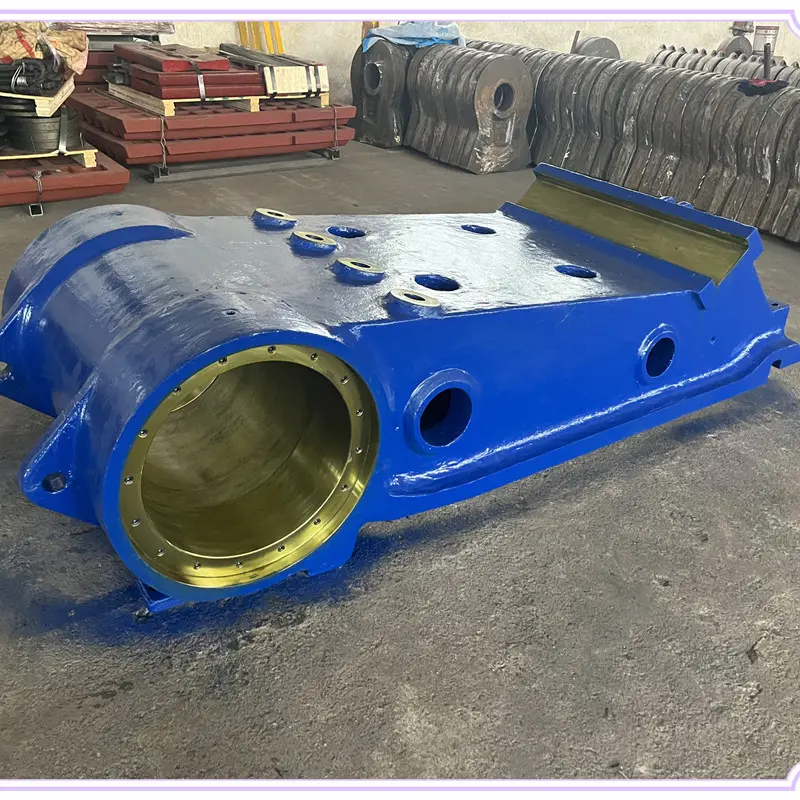
4. Practical Guide to Avoiding Pitfalls in Upper Frame Procurement Negotiations
1. Preparatory Stage: Accurate Selection & Fixed Standards
- Provide complete crusher model, upper frame drawings, key dimensions, and material requirements
- Clarify operating conditions: material hardness, daily operating hours, and environmental conditions
- Require suppliers to submit material certificates, heat treatment reports, and NDT test reports
2. Price Negotiation: Total Cost Over Unit Price
- Compare materials, craftsmanship, warranty, and after-sales service rather than price alone
- Calculate service life, maintenance costs, and downtime losses to select cost-effective solutions
- Negotiate tiered pricing for bulk orders to reduce unit costs
3. Contract Terms: Comprehensive, Rigorous & Clear Responsibilities
- Specify model, material, dimensions, technical standards, and acceptance specifications
- Define responsibilities for packaging, shipping, insurance, and customs clearance
- State warranty period, fault response time, and spare parts supply plans
- Confirm delivery schedule, late payment penalties, and return rules for quality defects
4. Supplier Audit: Equal Focus on Qualifications & Case Studies
- Verify production capacity, quality systems, export certifications, and third-party test reports
- Review local Middle East projects, client feedback, and performance records
- Prioritize qualified manufacturers supporting customization and on-site technical support
5. Logistics & Packaging: Professional Protection to Reduce Risks
- Use moisture-proof, rust-proof, reinforced packaging suitable for long-distance ocean transport
- Agree on cargo insurance to cover transit damage risks
- Coordinate customs clearance in advance and prepare invoices, packing lists, certificates of origin, and inspection certificates
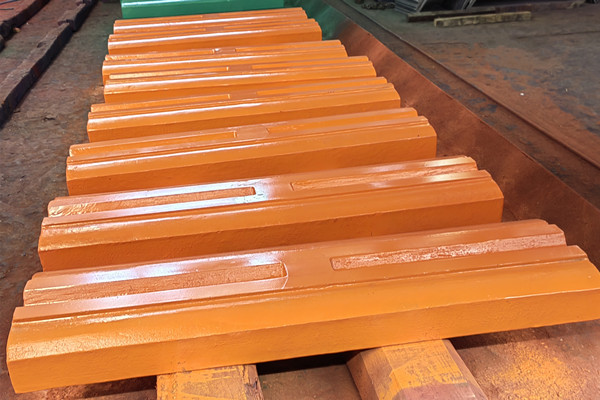
5. Quality Acceptance & Long-Term Operation & Maintenance Essentials
- Verify model, quantity, and appearance upon arrival; check for deformation, rust, and damage
- Conduct re-inspection of dimensions, hardness, and material composition per contractual standards
- Confirm foundation level, bolt tightening, and fitting clearance before installation
- Establish operation and maintenance files with regular inspections of wear, fasteners, and lubrication
- Stock critical spare parts to minimize fault-related downtime
6. Outlook on Future Industry Development
- Wearable safety apparel will further integrate AI early warning, predictive maintenance, and equipment linkage to achieve full-domain human-machine-environment safety control.
- Core crusher components will advance toward higher wear resistance, longer service life, lightweight design, and easier maintenance, with wider application of high manganese steel, high chromium iron, and alloy composite materials.
- Procurement in the Middle East aggregates industry will become more standardized and transparent, with technical agreements, quality certification, and after-sales systems as foundational cooperation terms.
- Digital procurement platforms will gain popularity, improving efficiency across model selection, price comparison, contracting, and logistics.
Conclusion
Meanwhile, import procurement of core components such as upper frames directly determines stable production line operation and corporate profitability.
Middle East aggregates companies must move beyond price-only misconceptions, prioritize standards, quality, contractual protection, and after-sales support to build a scientific and efficient procurement system, achieving a win-win of safety and benefits in fierce market competition.
Post time: May-19-2026