
A dealer in Western Australia won a new quarry account by quoting a set of crusher wear parts — cone liners — at USD 18,900, about 9% below the nearest competitor, only to learn three weeks later that the ocean freight had risen USD 1,200, the AUD had slipped 4% against the USD, and the customer’s standard 90-day payment term meant the cash was tied up well past the dealer’s own 30-day supplier invoice. What looked like a clean 22% margin on paper closed as a 3% loss once freight, currency and financing were counted. That gap is exactly where most wear parts dealers bleed profit, and it is why pricing discipline matters more than the headline number on the quote.
Price per tonne, not per part
The first discipline is to stop selling by price-per-part and start selling by cost-per-tonne. A buyer comparing two mantle quotes will naturally pick the lower unit price, but the cheaper liner that lasts 11,000 tonnes before change-out is far worse than a premium liner that delivers 15,500 tonnes from the same machine. For a quarry crushing 220 tonnes per hour across a 9-hour shift, the difference between those two liners is roughly USD 0.42 per tonne in wear cost, and that is the number the maintenance buyer actually defends inside the plant.
Build the comparison with real field data, not brochure claims. Track each liner’s installed hours, tonnes processed and change-out labour, then express it as a single cost-per-tonne figure your customer can present to management. Recommend the option that lowers the customer’s cost-per-tonne even when your unit margin is slightly lower, because a dealer who protects the customer’s operating cost earns the next three orders and the undercarriage business that follows.
- Record installed hours and tonnes per liner set for every job
- Express every quote as cost-per-tonne, never as a bare unit price
- Show the labour and downtime cost inside the comparison
- Keep a field log so the next quotation is built in minutes

How long should a wear parts quotation stay valid?
A quotation that stays open too long exposes the dealer to two moving targets: the manganese and steel spot price, and the currency pair on the invoice. Set a standard validity of 60 days for stocked fast movers and up to 90 days for project items, and never quote beyond 90 days on a volatile order. Manganese 18Mn plate moved as much as 11% in a single quarter last year, and a dealer who quoted 120 days out absorbed the full swing on a fixed price.
Build a clause that shares the risk instead of owning it. State that prices are firm only while the quotation is valid, and that any order placed after expiry is re-priced to the current metal index. For cross-border sales, quote in the same currency as your supplier where possible, or add a 2% currency buffer when the invoice currency differs from your cost currency by more than 5%.
For a USD 26,000 MP800 eccentric assembly that needs 8 weeks of production lead time, the buffer is not optional. MM0375453 eccentric assembly for MP800 cone crusher should be quoted with a metal-index link so a 7% steel move does not land on the dealer’s margin during the long build window.
Freight, incoterms and who carries the risk
Freight is where thin margins disappear, so the term you quote decides who eats the cost when a container rate jumps. Under EXW or FOB the buyer owns the freight risk; under CIF or DDP the dealer carries it until the parts clear the destination. A dealer quoting CIF without a freight ceiling can lose USD 900 to USD 2,400 per container when a route tightens without warning.
- Quote freight as a separate line, never buried inside the part price
- Match the incoterm to who actually controls the carrier
- Cap your CIF exposure with a validity shorter than the freight contract
- Pass fuel and surcharge changes to the buyer after order confirmation
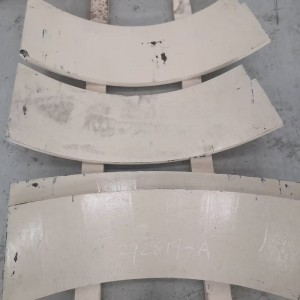
For protective items that ship in small batches, the per-kilo freight can exceed the part value if the term is wrong. 292819-A and 292819-B protection plates for Metso GP300S cone crusher are light, low-value items best quoted EXW or FOB so the buyer books the courier and the dealer avoids a USD 140 freight loss on a USD 95 part.
The real cost of 90-day credit, and stocked versus ordered-in
The 90-day payment term that won the account is also what turned the profit into a loss. A 90-day term on a USD 18,900 order financed at 9% annual cost of capital ties up roughly USD 420 of invisible interest the dealer never billed. Add a 1.5% bad-debt provision on new accounts and the true carrying cost is closer to 4% of the invoice before a single part moves.
Price stocked parts differently from parts ordered in on demand. A stocked mantle you already hold should carry a 28% to 32% margin because you own the carrying cost and the speed advantage, while an ordered-in liner with a 6-week lead can run at 18% to 22% because the buyer shares the wait. 452-8231 high manganese steel cone crusher wear parts 18 Mn for Sandvik machines are a fast-moving stock line, so quote them from inventory at the higher band and promise 5-day dispatch rather than competing on a bare unit price.
Should you quote the reline as a package or by the liner?
Quoting a complete reline package instead of individual liners protects margin and simplifies the buyer’s decision. Bundle the mantle, bowl liner, hardware and labour estimate into one cost-per-tonne package priced at 24% to 27% blended margin, which is higher than the 19% you would earn quoting each liner separately because the package removes the buyer’s line-by-line comparison. 7 ft cone crusher mantle casting wear part is the anchor of a 7 ft reline, and packaging it with the bowl liner lets you hold the margin on the full set.
Know when to walk away from a tender. Decline any tender that demands sub-15% margin, 120-day terms and a 6-month price lock, because all three risks land on the dealer at once. A mining fleet buyer who respects total cost will accept a 90-day validity and a 22% margin; a pure spec tender will not, and that account is not worth the loss it would force on the books.
Hold the counter margin when a customer brings a competitor’s number
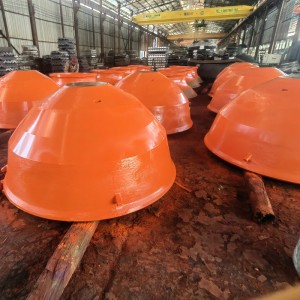
When an end customer walks in with a competitor’s lower number, do not match it blindly. Ask which incoterm, which validity and which payment term sit behind that competitor price, because a 12% cheaper quote often hides CIF freight risk and a 60-day shorter validity. fixed and swing jaw plates for mining jaw crusher quoted by a rival may exclude the wear-life data your field log can prove, and that proof justifies a 6% to 9% premium the customer will pay for certainty.
- Express every quote as cost-per-tonne backed by field data
- Set 60-day validity for stock, 90-day for project items
- Quote freight as its own line and pick the incoterm by control
- Charge 28% to 32% on stocked parts, 18% to 22% on ordered-in
- Add a 2% currency buffer when currencies differ by over 5%
- Walk from tenders below 15% margin with 120-day terms
- Defend the counter margin with wear-life proof, not a price cut
The next step is practical: open your price list this week and re-band every part family by margin, then put a 60-to-90-day validity clause and a separate freight line on your next quotation. Dealers who price by cost-per-tonne, protect freight and refuse unprofitable tenders keep their margin even when metal and currency move against them, and they win the quarry and fleet accounts that weaker competitors lose.
Related Pages
- Cast Idler vs Forged Idler: Evaluating on Total Cost of Ownership
- Stable Supply of Excavator Track Shoes: Selecting a Reliable Partner
- Aggregate Equipment Wholesale Purchasing Guide
Post time: Oct-29-2026