
A wooden crate arrives holding a GP300S cover, a pair of TK 63-75 mantles and a handful of MP-series locking nuts all mixed together. A dealer spends 2 days sorting them by part number, then still ships a GP300S motor to a gyratory crusher customer. In crusher spare parts receiving, that error is baked in at the packing table, not at the counter. One crate per machine model, a side mark with the model and part number, and a photo record made at the door turn a 2-day sort into a 20-minute check.
Why Should Every Crusher Model Get Its Own Crate?
A cone crusher cover and a gyratory mantle can look like unrelated castings, but both end up on the same shelf once a crate is opened. When three machine models share one box, the person unloading has to identify every piece from its casting shape, and that guess is where wrong shipments start. A mixed crate costs 2 days of labour and still leaves room for a GP300S part to reach a TK 63-75 customer.
The fix is a rule written into the purchase order: one crate per machine model, marked on two opposite sides before it leaves the foundry. Ask the supplier to print the model, the drawing part number and the packed quantity on the crate side in a 30 mm character height. A dealer who can read the crate without opening it never has to sort three models on the floor, and the marking becomes the first field on the receiving card.
Which Eight Fields Go on a Spare-Parts Receiving Card?
Every arriving crate should be signed off against the same 8 fields. A card that misses one of them gives the warehouse no basis to reject a wrong part later, so keep the list fixed and print it on the clipboard:
- Machine model and crusher family, copied from the crate side mark
- Part number and any drawing revision stated on the packing list
- Quantity counted piece by piece, not taken from the invoice
- Net weight in kg, checked against the stated figure for each casting
- Surface condition, including any visible casting flash or impact mark
- Rust protection and wrapping, recorded as intact, damaged or absent
- 3 photos from a fixed front, side and detail angle of the opened crate
- Accompanying documents such as the packing list and any heat record
Those 8 fields turn a delivery note into evidence that can be checked weeks later. The photos matter most: a part number can be scrubbed off a casting, but a time-stamped image of the crate side and its contents settles which parts actually arrived.
Reading the Part Number Before a Cover Leaves the Crate
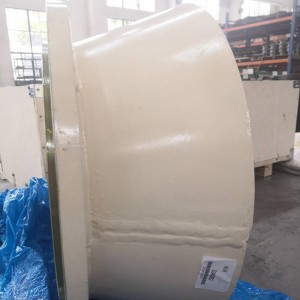
Begin the card with the casting whose number is easiest to confuse. The 340082 cover for the Metso GP300S cone crusher is ordered against a single part number, so the receiver compares the number cast on the cover with the number on the crate side and with the packing list before anyone signs. A one-character difference in a 6-digit number is grounds to hold the crate, not to file it. Record the matched number as the second field on the card.
Checking That a Cover Pair Arrives Together
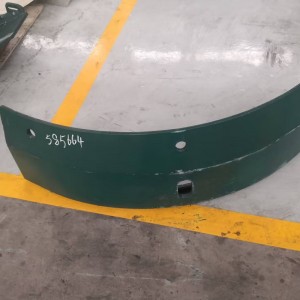
Some covers ship as a matched set, and splitting them across two crates is the same mistake as mixing models. The 585664 and 585701 matched cover pair for the GP300S should be counted as one set, with both numbers photographed side by side in the detail image. A single cover delivered without its mate strands a reline job while the second piece is traced. Note both numbers in the quantity field and photograph the pair before the crate is closed again.
Weighing the Motor and Inspecting Its Rust Protection
Heavy drive parts carry two fields that a visual check cannot cover. The 406303279891 motor for the Metso GP300S cone crusher should be weighed in kg and compared with the figure on the packing list, because a missing oil charge or an incorrect internal assembly shows up as a weight gap before it shows up at the crusher. Check the wrapping at the same time and write down whether the rust inhibitor and sealed bag are intact. A 5 percent weight gap or a torn vapour bag is enough to quarantine the motor pending a supplier answer.
How Do You Keep Mantles and Locking Nuts With Their Own Crate?
Large paired parts and small threaded parts fail in different ways, and the receiving card should say so. The upper and lower mantle pair for the TK 63-75 gyratory crusher must arrive in one crate with both pieces tagged together, since a mantle separated from its match loses the pairing information the fitter needs. Record the surface condition of each mantle and photograph the two tags in one frame.
Small parts need a count rather than a tag. The locking nut for the MP series cone crusher is easy to lose in straw or foam, so count every nut against the packed quantity and record the figure in the quantity field. A short count discovered at the crusher site, days after delivery, is almost impossible to claim. Seal the crate again after the count and note the seal number on the card.
How Many Crates Should a Dealer Sample on Arrival?
Not every crate needs a full unpack, but the sample must be large enough to catch a packing habit rather than a single accident. Draw 8 crates at AQL 2.5 from each arriving lot and complete all 8 fields on each of those crates. If two of the 8 sampled crates show a mixed model, treat the whole lot as mis-packed and hold it before it reaches the shelves. Keep the signed card and its 3 photos per crate on file for 90 days, so a claim can be supported after the units have been stored.
Write the remedy into the order as well: a crate that mixes machine models, lacks a side mark or arrives with an incorrect part number opens a 15-day claim window from the day the mismatch is found. A short count or a missing document sits in the same window. Name one person at the receiving dock who owns the card, the photos and the 90-day file.
One crate per machine model is the whole discipline. Mark the side, fill 8 fields, photograph every sampled crate and tie a mixed box to a 15-day claim. Dealers who do that stop sorting spares for 2 days and stop shipping a GP300S motor to a gyratory customer.

Related Pages
- Cast Idler vs Forged Idler: Evaluating on Total Cost of Ownership
- Stable Supply of Excavator Track Shoes: Selecting a Reliable Partner
- Aggregate Equipment Wholesale Purchasing Guide
Post time: Nov-24-2026