
Vibration and Noise: Early Warning Signs of Spindle, Bearing, or Rotor Issues
When your crusher suddenly emits unusual sounds and experiences increased body vibration, do you shut it down for inspection or push through production despite the issues? Vibration and noise are never minor concerns—they are distress signals from your equipment’s core components. Ignoring them can lead to costly unplanned downtime, severe component damage, or even safety incidents. This article will teach you to identify the root causes behind different vibration and noise patterns like an experienced maintenance engineer—is it spindle eccentricity, bearing wear, or rotor imbalance? Mastering these early diagnostic techniques allows you to nip minor issues in the bud, significantly extending equipment lifespan and reducing overall operating costs. Let’s begin decoding these equipment “signals.”
Signal Interpretation: What Fault Do Different Vibration Patterns Indicate?
Crusher vibrations aren’t random. Regular low-frequency vibrations often signal rotor imbalance. High-frequency, sharp vibrations may stem from bearing damage. Excessive axial (front-to-back) vibration strongly suggests poor spindle alignment.
Listening to sounds can also provide clues. A dull thud may indicate loose liners or large material jams. A persistent rattling sound often indicates bearing raceway wear. A sharp metallic grinding noise signals direct component contact.
Last year, a jaw crusher at a Hunan quarry exhibited periodic violent vibrations. On-site personnel mistakenly attributed this to feeding issues. Our analysis of the vibration spectrum revealed severe wear on the main shaft’s support bearings, causing eccentricity. After replacing the bearings, vibration levels immediately returned to normal.
Many operators ask: How much vibration constitutes an excess? While national standards (e.g., GB/T 6404) provide reference points, it’s more critical to compare against the equipment’s own “health baseline.” We recommend recording normal vibration values as a benchmark for new machines or after major overhauls.
Bearing Wear: How Noise Escalates Step by Step
Bearings are the “joints” of crushers. During early wear, noise is faint, resembling a rustling sound. Shut down for inspection at this stage—replacing a single bearing incurs the lowest cost.
In mid-stage wear, pitting appears on balls or raceways. You’ll hear distinct “clunking” sounds accompanied by rhythmic vibrations. By this point, the bearing housing may already be affected.
In the late stage, the inner and outer rings become severely worn or even fractured. The noise transforms into a shrill metallic grinding and clanging sound. At this point, the main shaft is likely already damaged, causing repair costs to skyrocket several times over.
We handled one such case. A rotary kiln crusher at a cement plant in Jiangxi began emitting abnormal noises from its bearings. Due to tight production schedules, the issue was delayed for half a month. This ultimately led to severe wear on the main shaft journal, incurring over 150,000 yuan in repair costs, with even greater losses from downtime.
Customers often agonize: “The bearing is noisy, but it still turns—how long can it last?” This is akin to gambling. Early-stage bearing replacement costs only a few hundred to a few thousand yuan. Delaying until the main shaft is damaged incurs tens of thousands in costs and significantly longer downtime.
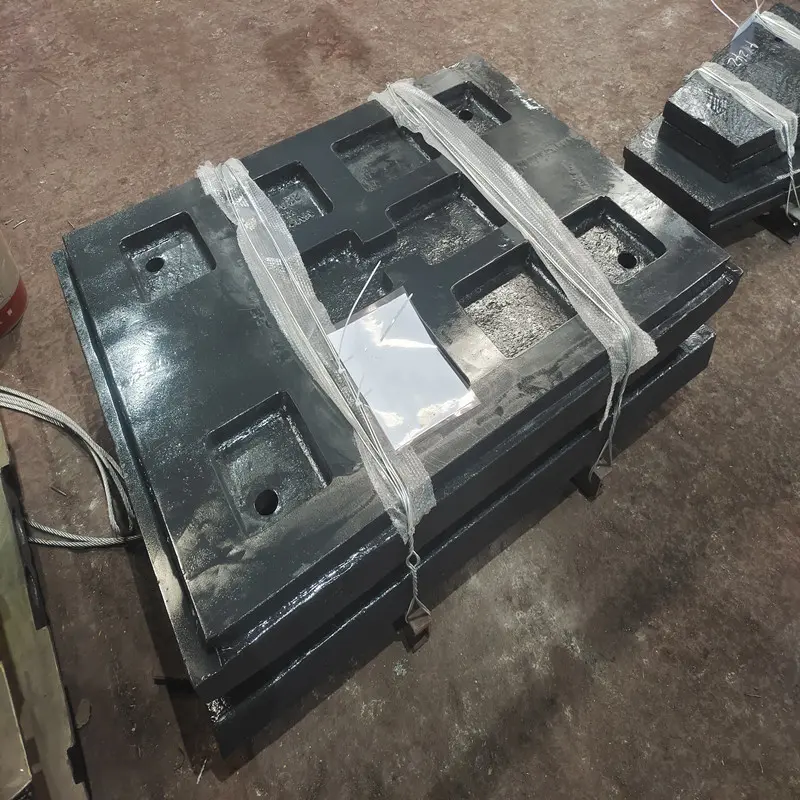
Rotor Imbalance: Why Is It the Primary Source of Vibration?
The rotor is the “heart” of the crusher. Uneven hammer wear, material adhesion, or even failing to balance newly replaced hammers can cause imbalance.
An unbalanced rotor generates powerful centrifugal forces during rotation. These forces act on the main shaft and bearings, triggering severe forced vibration. Prolonged operation accelerates fatigue failure in both components.
Dynamic balancing correction is critical. Standards require residual rotor imbalance to remain within G6.3 grade. After correction, vibration typically reduces by over 60%.
At an Inner Mongolia coal mine, an impact crusher exhibited excessive vibration post-overhaul. Inspection revealed that newly replaced plate hammers had weight deviations exceeding tolerances, causing severe rotor imbalance. The issue was fully resolved by rebalancing weights and performing dynamic balancing.
Some may wonder: Aren’t rotors balanced at the factory? Yes, but hammer wear and material adhesion during operation can disrupt balance. It is recommended to inspect the rotor condition every 300-500 operating hours or after hammer replacement.
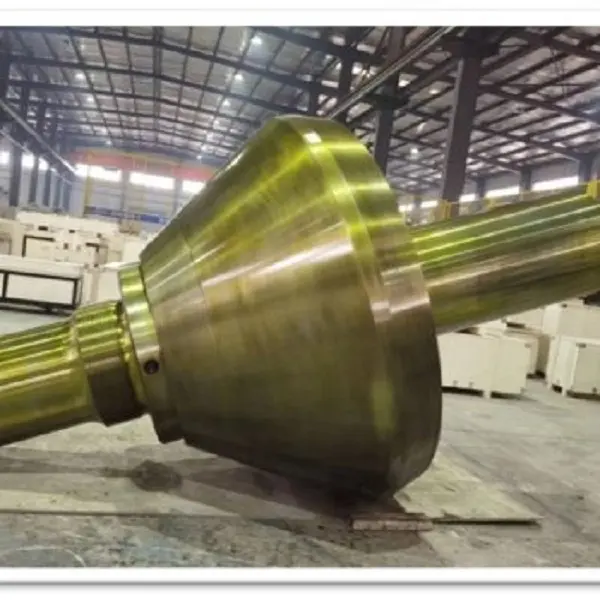
Main Shaft Failure: How to Identify the Most Costly Vibration Source?
The main shaft is the core component connecting the rotor to the motor. If it becomes bent, eccentric, or cracked, vibration becomes highly noticeable and dangerous.
When the main shaft is slightly bent, vibration values increase sharply with rising speed. This can be visually detected by measuring radial runout with a dial indicator. If cracks appear, resonance occurs at specific speeds, producing abnormal noises.
Such failures often stem from preceding issues. For instance, prolonged bearing failure can cause spindle wear, while severe rotor imbalance may lead to spindle fatigue.
A large mining enterprise in Hebei experienced spindle fatigue fracture in its cone crusher due to long-term neglect of bearing maintenance. The total cost of spindle replacement and downtime exceeded 800,000 yuan.
The most common concern: Can the main shaft be repaired? Minor wear can be repaired on-site (e.g., by electroplating). However, for bending or cracks, replacing it with an OEM or high-precision forged part is strongly recommended. Safety is paramount.
Practical Diagnosis: Three-Step Method to Pinpoint Vibration and Noise Sources
Step 1: Initial sensory assessment. Record the location, direction, and frequency of vibration. Listen to the type and rhythm of noise, noting its relationship with load changes.
Step 2: Tool-Assisted Measurement. Use vibration analyzers, acoustic probes, and infrared thermometers to obtain vibration velocity/displacement values, frequency spectra, bearing temperatures, and other data.
Step 3: Cross-Analysis Decision. Compare data against historical baselines, integrating equipment runtime and maintenance records to pinpoint the most likely faulty component.
We established a simplified condition monitoring system for a sand and gravel aggregate production line in Jiangsu. By regularly collecting vibration data, we successfully predicted multiple early bearing failures, preventing unplanned downtime.
What if factories lack precision instruments? Reliable sensory perception and experience remain crucial. Establish a regular inspection system to document equipment “health sounds.” Any change in sound signals the need for inspection.
Frequently Asked Questions (FAQ)
Q1: Is vibration normal for a newly installed crusher?
Some vibration is normal for new equipment, but it must remain within national standards or manufacturer specifications. The key is whether vibration values are stable. If vibration increases persistently or changes abruptly, immediately inspect the installation foundation, anchor bolts, motor alignment, and other conditions.
Q2: I hear slight bearing noises, but the equipment seems to run normally. Can I keep using it?
Not recommended. Bearing noises are clear early signs of wear. Continued operation accelerates damage and may affect other costly components (like the main shaft). Schedule a planned shutdown inspection immediately—this is the lowest-cost intervention window.
Q3: What is the most effective daily maintenance practice to prevent vibration and noise-related failures?
Three core practices: First, lubricate bearings regularly and properly using specified grease grades. Second, periodically inspect and tighten all bolts, especially those on rotor and liner components. Third, establish daily vibration and noise inspection logs, focusing on any “changes” rather than merely “exceeding limits.”
Meta Description: Abnormal vibrations and noises in crushers signal critical component issues. This article decodes how these indicators point to early failures in main shafts, bearings, or rotors, offering practical diagnostic methods and case studies to prevent costly downtime. Read now to enhance your predictive maintenance capabilities.
Keywords: crusher vibration analysis, bearing noise faults, main shaft wear indicators, rotor dynamic balancing, crusher noise diagnosis
Post time: Jan-06-2026