
The “Three Horses” of the Tracked Travel System: Functions and Common Failures of Drive Wheels, Idler Wheels, and Landing Gear
The “three horses” of the tracked travel system—drive wheels, idler wheels, and landing gear—are central to the stable operation of crushers. Many construction sites overlook potential failures in these components, leading to frequent shutdowns and track misalignment, resulting in daily losses exceeding thousands of yuan. This article dissects the functions, failure causes, and solutions for each component using real-world case studies, helping you reduce costs and boost efficiency. Below, we analyze the core points and practical techniques for each component.
Drive Wheel: How to Avoid Early Wear Failures in the Power Core?
The drive wheel shoulders the critical task of power transmission, driving the tracks and serving as the “heart” of the travel system.
At a quarry in Hebei Province, a crusher’s drive wheel bearing used a single-lip seal, resulting in a dust ingress rate of 1.2%. It failed after just 500 hours, achieving only 20% of its expected lifespan.
After replacing it with a self-aligning roller bearing featuring a double-lip seal, the lifespan extended to 18 months, reducing failure downtime by 70%. Selecting high-strength alloy steel for the material enhances impact resistance.
Common Question: How to select drive wheel materials for cross-border procurement?
Mining applications favor alloy steel, while landscaping conditions may opt for wear-resistant cast iron, balancing cost and durability.
Idler Wheels: Key to Guidance and Tensioning
How to prevent track misalignment?
Idler wheels guide the tracks and adjust tension, directly impacting travel stability.
In a bamboo forest shredding project, improper tension adjustment on the crusher idler caused frequent track misalignment. Daily downtime for adjustments reached 2 hours, severely impacting efficiency.
By adjusting tension to the standard range per the equipment manual and pairing with rubber tracks suited for forest terrain, the misalignment issue was completely resolved.
Common Question: How often should idler tension be checked? Inspect daily before operation in demanding conditions; weekly checks suffice for routine use.
Landing Gear (Idler Pulleys): How to Eliminate Oil Leak Risks in Support Systems?
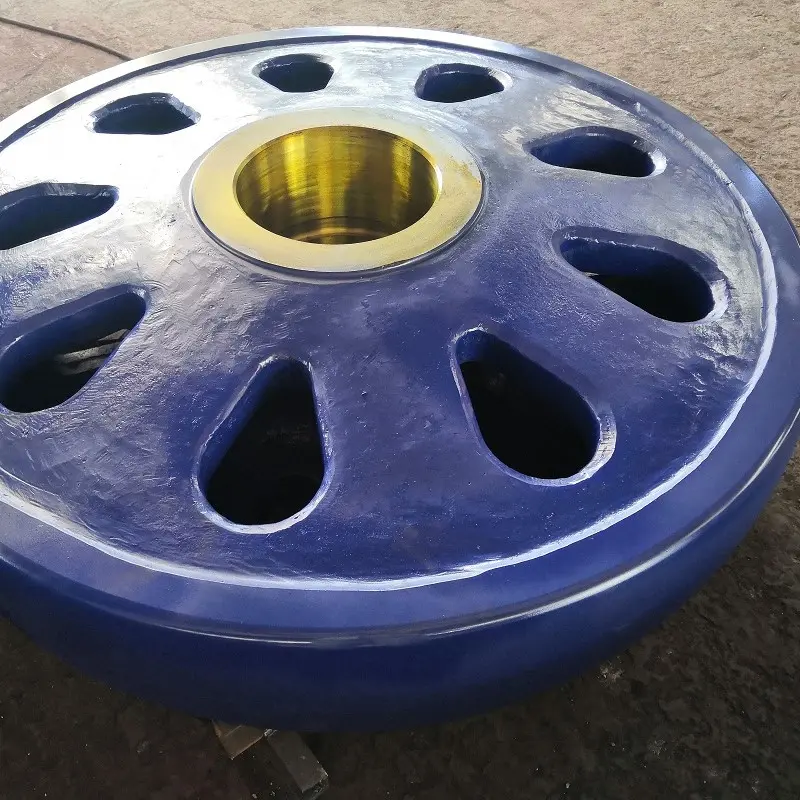
Landing gear supports track weight, with seal integrity directly determining operational stability.
At an open-pit mine crusher, nitrile rubber seals on the landing gear deteriorated and leaked under high-temperature conditions. Repair took 3 days, causing over 50,000 yuan in losses.
After replacing with fluororubber skeleton seals, the system adapted to high-temperature, dusty environments. Leakage rates were controlled below 0.01%, with continuous operation without issues.
Common Question: How to select landing gear oil seals for different operating conditions? Choose fluororubber for high-temperature corrosive environments; nitrile rubber suffices for standard conditions.
FAQ: High-Frequency Troubleshooting for Track Travel System Components
1. What certifications should be verified for cross-border procurement of these three component types? Focus on EU CE certification and ISO/TS 16949 certification to ensure materials and precision meet international standards for compatibility with imported crushers.
2. How to ensure compatibility when replacing parts in older machines? Prioritize verifying equipment model and part dimensions. Request suppliers to provide 3D drawings; if necessary, measure old part parameters for customization.
3. Are there compatibility differences between rubber and steel tracks? Idler wheels and landing gear contact surfaces require corresponding materials: rubber tracks use wear-resistant nylon contact surfaces, while steel tracks require alloy steel contact surfaces.
The coordinated stability of drive wheels, idler wheels, and landing gear is crucial for crushers operating in complex conditions. Mastering their functional characteristics and troubleshooting techniques reduces downtime losses while extending overall equipment lifespan. Whether procuring parts or performing routine maintenance, precise control tailored to actual operating conditions is essential—and the “three pillars” of the track travel system are the core enablers of efficient operation.
Meta Description
This article dissects the functions and common faults of the crusher track system’s “three pillars”—drive wheels, idler wheels, and landing gear. Drawing on case studies from mining and bamboo forest operations, it provides practical troubleshooting and selection solutions. This empowers cross-border buyers and B2B clients to avoid downtime losses, ensure precise component selection and maintenance, and boost operational efficiency.
Keywords
Crawler track system trinity, crusher drive wheel troubleshooting, idler tension adjustment, landing gear oil seal selection, cross-border procurement of crusher parts
Post time: Jan-20-2026