
The fluid mechanics design principle behind the CE certification of the deflector plate
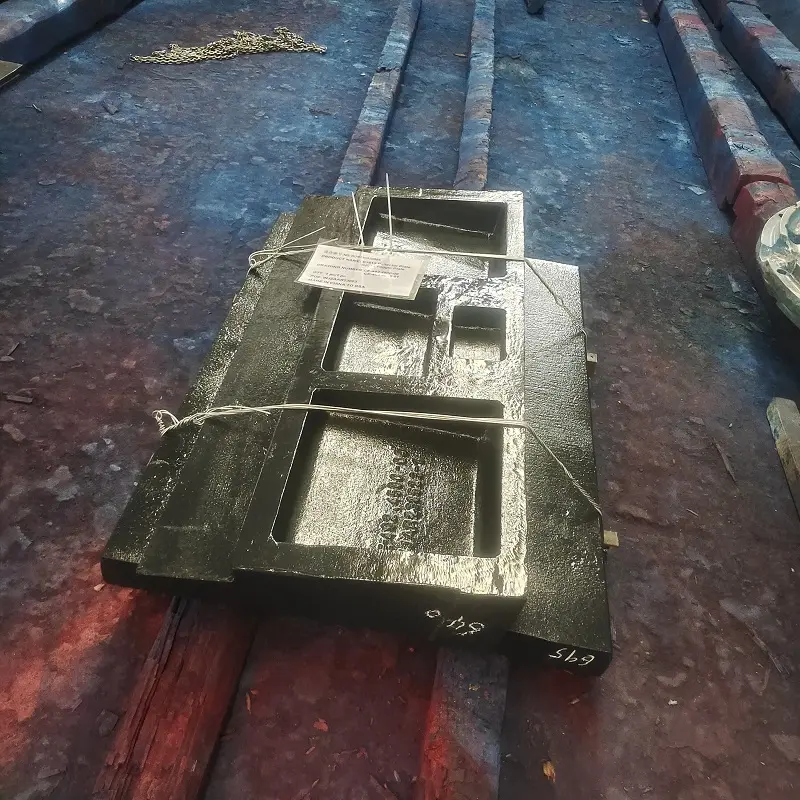
Has the output of your crusher suddenly dropped? Or is the hammer of the impact crusher worn out ridiculously fast? The problem might lie in an insignificant component – the deflector plate. Many purchasers believe that obtaining the CE certification means everything is fine. But certification is just a ticket; the real core lies in the design. A poorly designed deflector plate, even with a CE mark, will lead to low material sorting efficiency, accelerate wear and tear, and eventually erode your profits. This article does not delve into the dull certification process. What I aim to break down is to what extent a top-notch crusher accessory deflector plate must achieve in fluid mechanics in order to pass the strict CE certification (especially the mechanical Directive and noise Directive). Only by understanding these principles can you choose the right accessories and truly enhance the overall performance of the machine.
I. “Safe Flow Rate” in CE Certification: How Does the deflector Control the Material Trajectory?
The core of CE certification is safety. For the deflector plate, safety first and foremost refers to the controllability of materials. Out-of-control stone is a cannonball. The key to the design lies in controlling the flow rate and trajectory.
Fluid mechanics tells us that when materials impact the deflector plate, they will collide, rebound and be diverted. Poor design can cause materials to splash and even rebound onto the rotor, resulting in “secondary crushing” or damage. A certified design must precisely calculate the collision Angle.
The curved surface of the deflector plate is not bent randomly. Its curvature has been optimized through CFD (Computational Fluid Dynamics) simulation. The aim is to ensure that the material flow is smoothly introduced into the next crushing chamber or sorting screen at the most ideal Angle. This reduces turbulence and unpredictable rebounds.
Industry case: We once optimized the deflector plate for a limestone crushing line of a European client. The original plate causes fine materials to splash randomly in the cavity, resulting in low output and a large amount of dust. We redesigned the curved surface and adjusted the installation inclination Angle. The new board enables the materials to form a more concentrated “material curtain”. So, what was the result? The output of a single machine has increased by approximately 8%, and the measured working noise has been reduced by 3 decibels, making it easier to meet the CE noise limit. Customers often ask, “Does changing the Angle really have such a big effect?” Sure. This is like adjusting the entry track of a high-speed train. A one-degree difference makes a huge difference in stability.
Ii. The Fluid Secret Behind Wear Resistance: Why Can Good Design Extend Lifespan by Three Times?
Wear resistance is not solely achieved by surfacing hard alloys. Fluid mechanics design is the fundamental solution. Uneven material flow is the most ruthless “sandpaper”.
If the impact concentrations on different parts of the deflector plate surface are different, some points will be worn through very quickly. This is “local excessive wear and tear”. The rigorous design that has passed the CE certification must ensure that the material flow is distributed as evenly as possible on the plate.
We achieve this by designing “flow guide ribs” or special stepped surfaces. These structures can break up the concentrated material flow and evenly spread it over a larger ground surface. It is equivalent to dispersing the “pricking” injury into “caressing” wear and tear.
Key data: In one of our granite crushing projects, the optimized deflector reduced the local maximum impact velocity by approximately 40%. This has extended the average service life of the board from the original 400 hours to over 1,200 hours. The lifespan has directly tripled. A real purchasing question is: “Will adding deflector ribs instead hinder the material flow and affect the throughput?” On the contrary. Reasonable guide ribs are like the guide strips on expressways, which regulate the flow lines, prevent congestion (material accumulation), and ultimately improve the overall passage efficiency.
Iii. Noise Reduction Certification and Airflow Management: How Are Invisible Sound Waves Suppressed?
The noise directive of CE is very strict. One of the main noise sources of a crusher is the aerodynamic noise generated by the friction between high-speed materials and air as well as plates.
The deflector plate plays a dual role here. The first is to reduce the intense shearing between materials and air. The optimized plate shape enables the material to adhere and flow, reducing turbulence. The less turbulence there is, the less the sound of air tearing will be.
The second is to suppress structural vibration noise. If the deflector plate resonates due to the impact of the material flow, it will turn into a huge speaker. For designs that have passed CE certification, modal analysis must be conducted to ensure that the natural frequency of the deflector plate is far away from the main impact frequency.
Practical experience: We helped a mobile crusher used for urban construction waste treatment pass the CE noise certification. The original deflector plate was a simple flat plate with excessive noise. We changed it to a swept-back airfoil curved surface design and added damping reinforcing ribs on the back. This not only smooths the material flow but also alters the structural vibration characteristics. The final noise level of the entire machine was successfully met, and it obtained the pass to enter the European market. This modification, essentially, applies the aerodynamics and shock absorption designs from the aviation field to the parts of the crusher.
FAQ (Frequently Asked Questions
1.Question: Can a CE certified deflector plate definitely be compatible with my equipment and enhance its performance?
Answer: Not necessarily. CE certification mainly ensures basic safety and compliance with environmental protection standards. It does not guarantee optimal performance. Just like cars have safety certifications, but their fuel consumption and handling are different. The key to enhancing performance lies in whether the design of the deflector plate has been fluid mechanics optimized for the characteristics of your materials (hardness, viscosity, particle size) and the model of the main machine. When making a purchase, please be sure to provide your working condition data.
2. Q: Fluid mechanics design sounds very high-end. Is its cost much higher than that of ordinary deflector plates?
Answer: The initial R&D and mold costs are indeed higher. However, when averaged out to individual items, the premium is usually only 20% to 30%. Considering the increased output, reduced wear and energy savings it brings, the overall usage cost has actually dropped significantly. It is a typical investment that is “a bit expensive to buy but extremely economical to use”.
3. Q: Can I optimize the deflector plate by thickening it through surfacing welding or modifying the Angle by myself?
Answer: Highly not recommended. Surfacing welding can damage the original hydrodynamic surface, which may lead to more chaotic material flow and faster wear. Modifying the Angle is even more of a domino effect, affecting the flow field balance of the entire crushing cavity. Non-professional modifications are very likely to lead to a decrease in output, accelerated wear and tear, and even safety issues such as equipment vibration. Professional design must be based on overall simulation and testing.
When the design of a deflector plate shifts from “empirical” to “fluid mechanics calculation”, it transforms from a consumable part into a key performance optimizer. CE certification is the market entry threshold, but the deep fluid mechanics principles hidden behind the certification are the true core that determines the crushing efficiency, wear-resistant service life and operating noise. Choosing such crusher parts is like choosing to purchase a genuine performance insurance policy for your entire machine investment.
Meta Description:
In-depth Analysis of the Core Behind the CE Certification of Crusher Deflector Plates: Fluid Mechanics Design Principles. Learn how to increase production, extend service life and meet certification requirements by optimizing material trajectories, uniform wear distribution and airflow management. Select scientifically designed deflector plates for your equipment. Click to get professional solutions.
Keywords:
Crusher deflector plate, CE certification for deflector plate, crusher parts, fluid mechanics design, wear-resistant deflector plate
Post time: Dec-24-2025