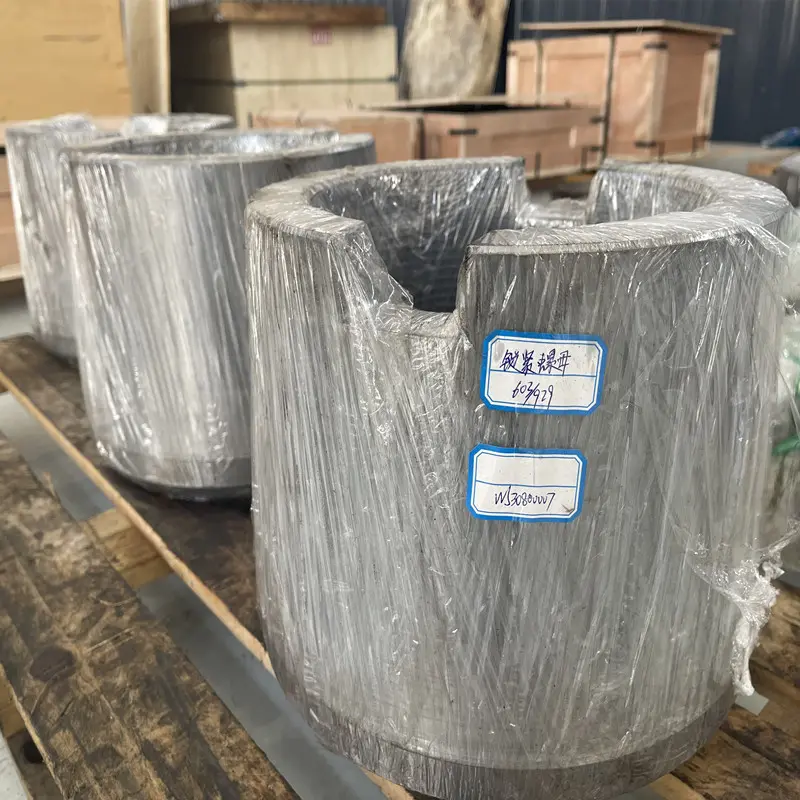
Preload Force Control of Mantle Nuts: The Key to Ensuring Safe Operation of Crushers
Preload force control of mantle nuts: The key to ensuring safe crusher operation—this is the core headache for many cross-border buyers, crusher wholesalers, and end-users. For bulk-purchased mantle nuts, either improper preload force control or poor adaptability leads to loose nuts, accelerated component wear during crusher operation, and even equipment shutdowns and safety hazards. Once such problems occur for end-users, it not only incurs high maintenance costs but also delays production progress, triggering a flood of complaints. Whether you are involved in procurement selection, bulk wholesale, or end-user operation, this article will help you master preload force control techniques and avoid pitfalls in procurement and use after reading. Next, we will break down the core logic of mantle nut preload force control step by step, teaching you how to ensure the safe and stable operation of crushers through scientific control.
Why Is Mantle Nut Preload Force the “Lifeline” of Safe Crusher Operation?
Many buyers and end-users have a misunderstanding: they think mantle nuts just need to be tightened, and there’s no need to deliberately control preload force. In fact, this is the root cause of frequent crusher failures. Crushers generate continuous vibration and impact when crushing ore and construction waste, with extremely complex working conditions.
As a core connecting component of crushers, mantle nuts are responsible for fixing key parts such as the cone liner and mantle. Their preload force directly determines the firmness of component connections and is the core of avoiding safety hazards. Insufficient preload force will cause components to loosen and shift, accelerating wear and even leading to the cone liner falling off in severe cases; excessive preload force will cause nuts and bolts to break, and even damage the equipment housing.
We once cooperated with a cross-border buyer specializing in mining accessory exports. Two years ago, he bulk-purchased a batch of low-cost mantle nuts without clear preload force standards. After installation by end-users, three crushers experienced loose nuts within less than a month, and one of them had a shifted cone liner, resulting in equipment shutdown and maintenance with a direct loss of over 100,000 yuan. The subsequent return and rework rate remained high. Later, we helped him standardize preload force standards and screen mantle nuts adapted to different crusher models. Similar complaints were directly eliminated, and he even secured long-term repeat orders from overseas mining enterprises.
Buyers and end-users often ask: “Can we avoid loosening by tightening mantle nuts as tightly as possible?” In fact, over-tightening is counterproductive. Exceeding the nut’s bearing limit will cause breakage, and excessive preload force will damage the liner seal. The correct approach is to control a reasonable preload force range based on the crusher model and working conditions.
Mantle Nut Preload Force Standards: How to Precisely Match Different Crusher Models?
The core of
mantle nut preload force control is “precision matching”. There is no unified standard; the key lies in the crusher model, specifications, and actual operating conditions. This is also the most common pitfall for buyers when selecting products—blindly purchasing nuts of the same specification while ignoring preload force adaptability.
From a practical operation perspective, preload force standards mainly depend on two core factors: crusher type and mantle nut specification. For example, for small jaw crushers with smaller mantle nut specifications, the preload force should be controlled at 80-120 N·m; for medium-sized cone crushers with larger specifications, the preload force needs to be controlled at 150-250 N·m; for large impact crushers with more complex working conditions, the preload force should reach 300-450 N·m.
We have a wholesaler customer who supplies domestic construction crushing enterprises. Previously, he purchased mantle nuts with a single preload force standard for all models, leading to end-user feedback that “some models had too loose nuts and others too tight”, resulting in a sharp decline in order volume. Later, we helped him classify by crusher model, clarify preload force adaptability standards for different models, and mark the corresponding model and preload force range on the product packaging.
After the adjustment, the end-user experience improved significantly, and the repurchase rate increased by 30%. Many buyers ask: “When making cross-border purchases, how to confirm if the mantle nut preload force is adapted to overseas crusher models?” It’s actually very simple. Confirm the crusher model and specifications with overseas customers in advance and provide preload force test reports for the corresponding models, which can effectively avoid adaptability issues.
Preload Force Control Methods: How to Avoid Over-Tightening or Over-Loosening in Practice?
For end-users, mastering scientific preload force control methods can significantly reduce equipment failures; for buyers and wholesalers, understanding these control methods also enables them to better serve end-users, enhance reputation—this is practical experience summarized from years of deep engagement in the industry.
There are currently three mainstream preload force control methods with strong practicality and wide adaptability: torque control method, angle control method, and hydraulic preload method. Among them, the torque control method is the most commonly used, simple to operate—directly set the corresponding torque value with a torque wrench and tighten to the preset value, suitable for most end-user scenarios; the angle control method has higher precision and is suitable for medium and large crushers; the hydraulic preload method is suitable for large cone crushers, achieving uniform preload and avoiding uneven local stress.
We once cooperated with a large mining enterprise. Their cone crushers used traditional manual tightening without scientific preload force control, often experiencing loose or broken mantle nuts, with monthly maintenance costs as high as tens of thousands of yuan. Later, we suggested they adopt the hydraulic preload method combined with accurate torque detection, and provided practical training. After the adjustment, the equipment failure rate was reduced by 80%, and monthly maintenance costs were saved by over 60%.
Many end-users ask: “Without professional tools, how to simply judge if the mantle nut preload force is appropriate?” In fact, a simple judgment method can be used: after tightening, shake the nut by hand—if there is no loosening, no shift, and no obvious deformation of the nut, it basically meets the requirements; if conditions permit, use a simple torque wrench to further improve accuracy.
Key Points for Cross-Border Procurement: How to Control Mantle Nut Quality and Ensure Stable Preload Force?
For cross-border buyers, controlling mantle nut quality requires not only focusing on preload force standards but also the material and craftsmanship of the products themselves. After all, quality is the foundation of stable preload force and the key to reducing end-user complaints—a point many cross-border buyers easily overlook.
Three core aspects should be prioritized during procurement: material, craftsmanship, and testing. For materials, prioritize high-strength alloy steel, which has high tensile strength and wear resistance, can withstand vibration and impact under complex working conditions, and avoid ordinary carbon steel, which is prone to breakage; for craftsmanship, prioritize mantle nuts with heat treatment, which can improve hardness and toughness and ensure stable preload force; for testing, require suppliers to provide preload force test reports to ensure that each batch of products meets the preload force standards.
We have a cross-border buyer serving the European and American markets. In the early stage, to control costs, he purchased mantle nuts made of ordinary carbon steel without heat treatment. As a result, after being shipped overseas by sea, many products experienced unstable preload force and nut deformation, leading to returns and reworks by end-users and a direct loss of hundreds of thousands of yuan. Later, he strictly followed our standards, screened products made of high-strength alloy steel with heat treatment, and required each batch to be accompanied by test reports.
In the subsequent two years of cooperation, there were almost no similar complaints, and he also accumulated stable overseas customers. Many buyers ask: “Will the preload force of mantle nuts be affected during cross-border transportation?” In fact, no. As long as the packaging is reasonable and moisture-proof and anti-collision treatments are done well, the preload force will not change, so there is no need for extra worry.
FAQ: High-Frequency Questions About Mantle Nut Preload Force
-
What specific harms will insufficient mantle nut preload force cause to crushers?
There are three core harms: first, it will cause key components such as the cone liner and mantle to loosen and shift, accelerate component wear, and shorten the service life; second, it will generate abnormal vibration and noise, affecting the stable operation of the crusher; third, in severe cases, it will lead to component detachment, triggering equipment shutdown and safety accidents, and increasing maintenance costs and production loss.
-
When purchasing mantle nuts for cross-border trade, how to ensure stable preload force while controlling costs?
Prioritize high-strength alloy steel materials; there is no need to pursue overly high specifications, just match the preload force standards of the corresponding crusher models; for craftsmanship, choose products with basic heat treatment, which offers the highest cost performance; purchase in bulk and negotiate with suppliers to provide preload force test reports, which can both control costs and ensure quality.
-
Do mantle nuts need to be rechecked and have their preload force adjusted after a period of use?
Yes. It is recommended to check the preload force every 15-20 days of operation, especially for crushers with continuous operation and complex working conditions, where the inspection cycle should be shortened; if loose or shifted nuts are found, adjust the preload force in a timely manner using the corresponding method, which can effectively avoid equipment failures and extend the service life of the equipment and nuts.
In summary, mantle nut preload force control is never just “tighten it up”, but a combination of precise model matching, mastering scientific methods, and controlling product quality. Mastering these key points, whether you are a cross-border buyer selecting products, a wholesaler supplying in bulk, or an end-user operating the equipment, you can avoid pitfalls, select the right products, use the correct methods, effectively ensure the safe and stable operation of crushers, reduce failures and losses—and this is the core answer to Preload Force Control of Mantle Nuts: The Key to Ensuring Safe Operation of Crushers.
SEO Supporting Elements
Meta Description: Want to know Preload Force Control of Mantle Nuts: The Key to Ensuring Safe Operation of Crushers? Senior experts in the crusher accessory field break down preload force standards, control methods, and procurement key points, combined with real industry cases, to solve pain points in cross-border procurement, wholesale, and end-use. Suitable for multiple models, helping reduce failures and improve repurchase rates. A must-read for procurement selection and practical operation—unlock professional skills now!
Keywords: mantle nut preload force control, cross-border procurement of mantle nuts, crusher mantle nuts, mantle nut preload force standards, mantle nut procurement