
Jaw crusher “super tooth” design: How to improve crushing efficiency and reduce over-crushing through optimizing tooth shape?
The jaw crusher’s tooth plate (commonly known as jaw crusher teeth) is the core wear part in crushing operations. Whether it’s cross-border buyers stocking up in bulk, wholesalers selecting products, or end-users such as mines and construction companies, they are all plagued by the same problem: ordinary jaw crusher teeth either have low crushing efficiency, frequently cause material jamming, or suffer from severe over-crushing, resulting in too much fine material that cannot be utilized. This not only wastes energy and materials but also increases the frequency of accessory replacement and procurement costs. After reading this article, you will fully understand the design logic of the “super teeth” for jaw crushers, grasp the core points of tooth shape optimization, and learn how to select the right tooth shape to enhance crushing efficiency, reduce over-crushing, and avoid common pitfalls in procurement and use. Next, let’s start with the design core of the “super teeth” and break down the intricacies step by step.
The core design logic of the “super tooth” in jaw crusher: why can tooth shape determine crushing efficiency?
Many buyers and end-users have a misconception that it is sufficient for jaw crusher teeth to be wear-resistant. However, this is not the case. The design of the tooth shape directly determines the crushing path and force conditions of the material, which is the key to affecting crushing efficiency and also the core difference between “super teeth” and ordinary teeth.
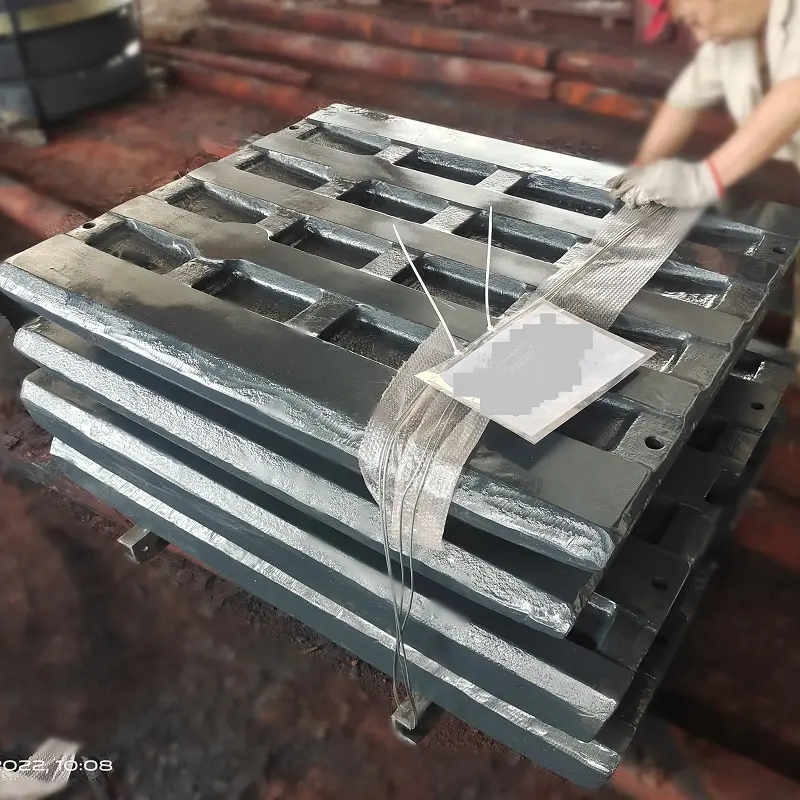
Most conventional jaw crusher teeth are designed with straight teeth, featuring uniform tooth spacing but unreasonable angles. When materials enter the crushing chamber, the force is concentrated on the tooth tips, leading to issues such as material jamming and incomplete crushing, which naturally affects efficiency. However, the “super teeth” adopt a bionic curved tooth design, combining the mechanical principles of material crushing to optimize the ratio of tooth angle, tooth spacing, and tooth height. This allows materials to slide smoothly and receive even force, achieving “one-time crushing and forming”.
We have provided “super teeth” replacement services for jaw crushers to a large domestic mine. Previously, they were using ordinary straight teeth plates, which had a crushing capacity of only 80 tons per hour and an over-crushing rate of 18%. After replacing with “super teeth”, the crushing efficiency increased to 110 tons per hour, and the over-crushing rate directly dropped to 8%. This resulted in a monthly energy cost savings of nearly 20,000 yuan, and the replacement cycle of parts was also extended from one month to 2.5 months.
Many users ask, “What is the difference between ‘super teeth’ and ordinary jaw crushing teeth, besides the tooth shape?” Actually, the core difference lies in the design logic – ordinary teeth only focus on wear resistance, while ‘super teeth’ take into account wear resistance, efficiency, and material control. By optimizing the tooth shape, it reduces material loss and lowers equipment load. Over long-term use, it can save considerable costs.
Key design parameters of the “super tooth” in jaw crusher: what details can reduce over-crushing?
Over-crushing is one of the most troublesome issues in jaw crushing operations. Excessive fines not only affect subsequent screening and conveying efficiency but also lead to material waste. The key to solving this problem with “super teeth” lies in the optimization of three core design parameters: tooth angle, tooth pitch, and tooth height.
The tooth angle determines the force direction of the material. The “super tooth” optimizes the tooth angle to 45°-55°, which can ensure that the material is effectively squeezed and crushed, while avoiding excessive crushing that leads to too much fine material. The tooth pitch is adjusted according to the particle size of the crushed material. In coarse crushing scenarios, the tooth pitch is slightly larger, while in fine crushing scenarios, it is smaller to avoid material getting stuck between the teeth and unable to be crushed. The tooth height controls the effective volume of the crushing chamber. After optimization, it can reduce the residence time of the material in the chamber and minimize over-crushing caused by secondary crushing.
According to industry practical data, under the same working conditions, the use of “super teeth” with optimized tooth profiles can reduce the over-crushing rate by 8%-12% compared to ordinary teeth, and increase material utilization by more than 10%. It is particularly suitable for crushing scenarios involving materials with high hardness, such as granite and basalt.
There was a cross-border purchaser from the Middle East who previously purchased ordinary jaw crusher teeth. When used for crushing basalt, the over-crushing rate was as high as 22%, and many fine materials could not be used as construction aggregates and had to be discarded. Later, based on the material characteristics, we customized “super teeth” with optimized tooth spacing and tooth angles. The over-crushing rate was directly reduced to 10%, the utilization rate of fine materials was greatly improved, and the satisfaction of its end customers was also significantly enhanced.
Purchasers often ask: how to choose the tooth profile parameters of “super teeth” for different materials? It’s actually quite simple. First, determine the hardness of the crushing material and the target particle size. For coarse crushing (particle size above 50mm), choose a large tooth pitch and a moderate tooth height. For fine crushing (particle size below 50mm), choose a small tooth pitch and a slightly lower tooth height. Manufacturers will generally customize the appropriate parameters based on your needs.
Material and tooth shape combination of “super teeth” for jaw crusher: how to balance wear resistance and crushing effect?
No matter how well-designed the tooth profile is, if the material quality cannot keep up, long-term efficient crushing cannot be achieved. Many users have reported that the “super teeth” are not wear-resistant. This is not a design issue, but rather a failure to match the material with the tooth profile appropriately, ignoring the varying needs of different crushing scenarios.
The material selection for “super teeth” is primarily determined by the hardness of the materials being crushed. For crushing medium to low-hardness materials such as ordinary limestone and cobblestones, high-manganese steel is a suitable choice due to its high cost-effectiveness, good toughness, and ability to withstand impact loads. For crushing high-hardness materials such as granite and quartzite, high-chromium alloy steel is required, which offers higher hardness and superior wear resistance, extending the service life by more than 30% compared to high-manganese steel.
We once encountered a domestic construction enterprise user who employed “super teeth” made of high manganese steel for granite crushing. However, after just 20 days of use, severe wear and tear occurred, resulting in the cracking of the tooth tips. Subsequently, we replaced them with “super teeth” made of high chromium alloy steel. Under the same working conditions, the service life was extended to 60 days, and the crushing efficiency remained stable throughout, effectively solving the problem of frequent replacement of parts.
Many users ask: is it worth buying “super teeth” made of high chromium alloy steel, which are more expensive than high manganese steel? To be honest, although the initial procurement cost is slightly higher, the service life is significantly extended, and the replacement frequency is reduced. In the long run, it can save procurement and downtime maintenance costs, especially for crushing scenarios involving high-hardness materials.
Selection and installation of “super teeth” for jaw crushers: how to avoid pitfalls in cross-border procurement?
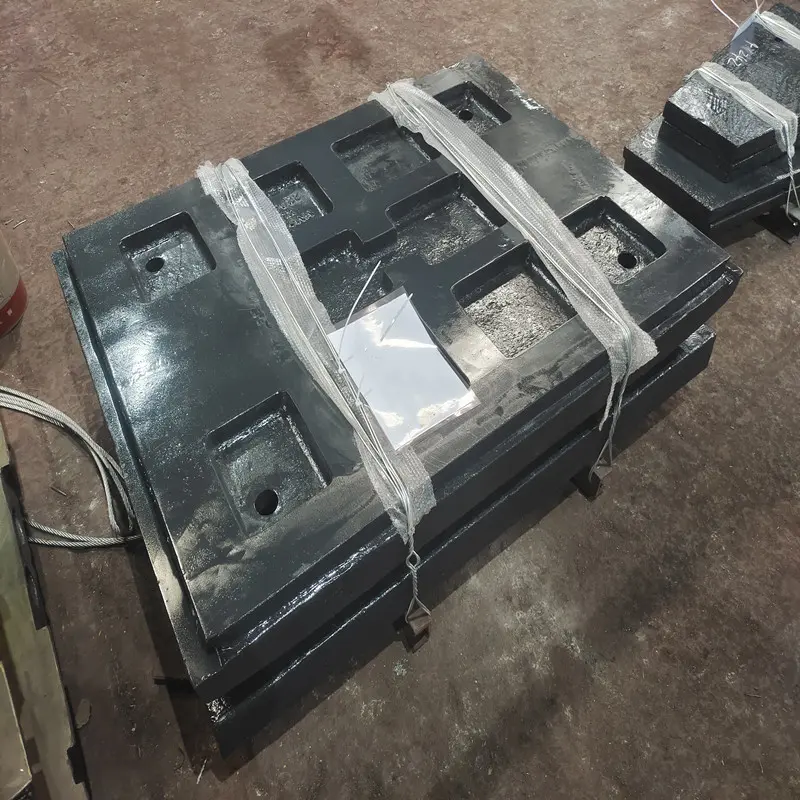
For cross-border buyers and wholesalers, when selecting the “super tooth”, they should not only focus on design and material, but also pay attention to model selection and installation details. Otherwise, even the best product cannot achieve its intended effect and may even damage the jaw crushing equipment.
The core of model selection lies in matching the jaw crusher model with the crushing scenario. Different models of jaw crushers have varying crushing chamber sizes and feed inlet sizes, which correspond to different “super tooth” sizes. For instance, the PE600×900 jaw crusher requires the use of tooth plates that are compatible with this model. Forcing universal use can lead to material jamming, abnormal equipment noise, and even damage to the eccentric shaft.
There was a European cross-border purchaser who, in an attempt to save costs, purchased “super teeth” that were not the right size. After installation, not only did the crushing efficiency become inefficient, but it also caused wear on the eccentric shaft of the jaw crusher, resulting in maintenance costs of nearly $10,000 and immeasurable production losses due to a three-day downtime. Later, based on the model of the jaw crusher, we customized suitable “super teeth” for them. After installation, the equipment operated smoothly, and the crushing efficiency met expectations.
Many cross-border buyers ask: how to ensure the selection and compatibility of “super jaws” for cross-border procurement? Actually, it’s quite simple. Before purchasing, it is essential to provide detailed information about the jaw crusher model, feed inlet size, and crushing material. Request the supplier to provide a compatibility plan and samples. If necessary, conduct trial assembly and testing. At the same time, choose suppliers with experience in cross-border supply and who can provide after-sales guidance.
Jaw crusher “Super Tooth” high-frequency FAQ (must-see for procurement/use)
1. How much longer is the lifespan of “super teeth” in jaw crushers compared to ordinary teeth?
The lifespan mainly depends on the material and the crushing scenario. For high manganese steel “super teeth”, their lifespan is extended by 50%-80% compared to ordinary high manganese steel teeth; for high chromium alloy steel “super teeth”, their lifespan is extended by 100%-150% compared to ordinary teeth, with the average replacement cycle extending from 1-1.5 months to 2-3 months.
2. What are the considerations for the transportation and installation of “super teeth” for cross-border procurement of jaw crushers?
During transportation, shockproof and rustproof packaging should be used to avoid wear and deformation of the tooth surface. During installation, the tooth plate gap should be adjusted to ensure tight fit and avoid loosening. After installation, a no-load trial run should be conducted first, and the equipment should be put into use only after no abnormalities are found. Regular inspections of tooth surface wear should be carried out daily, and the gap should be adjusted in a timely manner.
3. Can the “super teeth” of jaw crusher be adapted to all models of jaw crushers?
No, they cannot be universally used. Different models and manufacturers of jaw crushers have different crushing chamber structures and sizes. The “super teeth” need to be customized according to the specific model. When purchasing, it is important to provide accurate jaw crusher models and relevant parameters to avoid selection errors.
summary
The core value of the “super tooth” of jaw crusher lies in solving the pain points of low efficiency and severe over-crushing of ordinary jaw crusher teeth through scientific tooth shape optimization. It takes into account wear resistance, efficiency, and material control, helping cross-border buyers choose the right products and wholesalers enhance their competitiveness, and assisting end users in reducing costs and improving production efficiency. From tooth shape design, parameter optimization, to material matching, selection, and installation, every detail cannot be ignored. Remember, when choosing jaw crusher teeth, don’t just look at price and wear resistance. Combine your own crushing scenario and equipment model to choose the right “super tooth” design to maximize cost-effectiveness. And high-quality “super teeth” for jaw crushers can also become a core boost for you to enhance the efficiency of crushing operations.
SEO supporting elements
Meta Description: Comprehensive Analysis of the “Super Tooth” Design for Jaw Crushers: Detailed Explanation of the Core Logic, Key Parameters, and Material Combinations for Tooth Profile Optimization, Combined with Real Industry Cases, Teaching You How to Improve the Crushing Efficiency of Jaw Crushers and Reduce the Over-crushing Rate by Choosing the Right “Super Tooth”. Helping Cross-border Purchasers and Wholesalers Avoid Selection Traps and Assisting B-end Users in Reducing Costs. For Customized and Adaptive “Super Tooth” Solutions for Jaw Crushers, Feel Free to Consult.
Keywords: jaw crusher super tooth design, jaw crusher tooth shape optimization, cross-border procurement of jaw crusher teeth, improvement of jaw crusher crushing efficiency, jaw crusher over-crushing solution
Post time: Mar-03-2026