
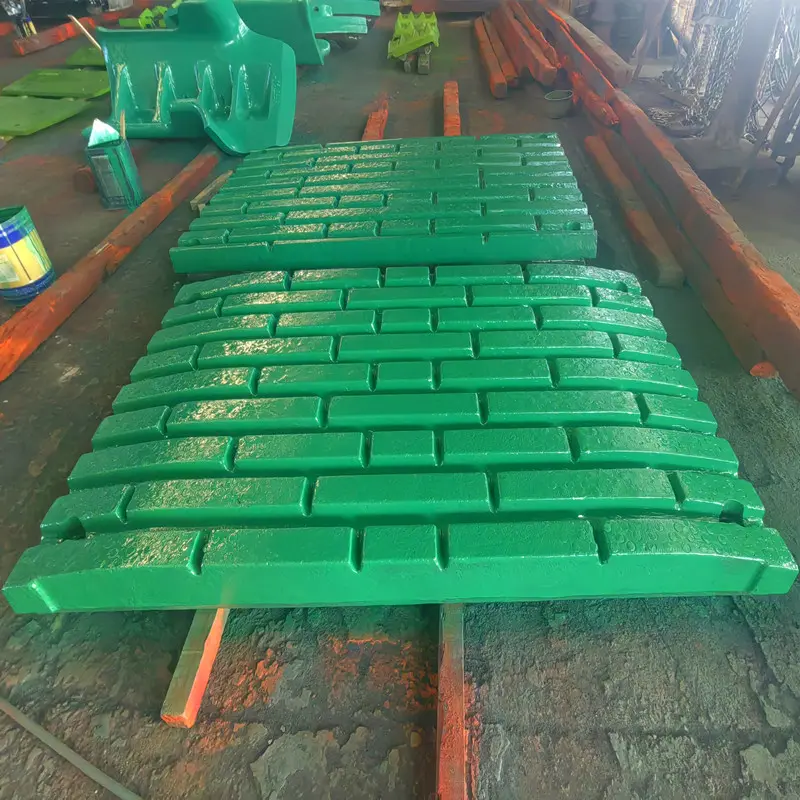
Within mining equipment supply chain management, jaw plates are the most heavily consumed wear parts for jaw crushers. Their material selection directly determines production line downtime frequency, production cost per ton of aggregate, and final product particle shape quality.
On-Site Crushing Pain Points: Beyond Basic Wear
- High Downtime Costs: Frequent jaw plate replacements halt production, representing substantial hidden costs for large North American aggregate operators running 24/7 continuous operations.
- Particle Size Control Challenges: As jaw plates wear, the discharge opening widens, resulting in off‑spec aggregate that requires secondary crushing and increases energy consumption.
- Supply Chain Volatility: Recent global supply chain instability pushes buyers to adopt more reliable, high‑performance alternative materials and reduce over‑reliance on inventory.
Three Core Trends in Jaw Plate Material Upgrades
1. Performance Breakthroughs with High Chrome Iron & Alloy Steel
High chrome iron and alloy steel have become preferred choices for high‑abrasion environments due to their exceptional hardness.
- High Chrome Iron: Delivers outstanding abrasive wear resistance, especially ideal for crushing high‑silica rocks.
- Alloy Steel: Alloyed with chromium, molybdenum, vanadium and other elements, it achieves an optimized balance of hardness and toughness, with significantly improved tensile strength and resistance to breakage.
2. Composite Materials & Cemented Carbide Inserts (TiC & Hardfacing)
These composite jaw plates embed ultra‑hard materials in high‑wear tooth face zones while retaining a high‑toughness base material.
3. Synergy Between Deep‑Chamber Design & High‑Strength Alloy Materials
Growing demand for deep‑chamber reversible crushers and high‑alloy crushing equipment in North America requires jaw plates with enhanced fatigue resistance.
Material Comparison: From Traditional to Advanced Solutions
| Material Type | Hardness (HRC) | Toughness | Suitable Applications | Service Life Improvement |
|---|---|---|---|---|
| Standard Manganese Steel (ZG Mn13) | Relatively Low | Excellent | Low‑medium hardness rock, high impact | Baseline (1x) |
| Modified Manganese Steel (ZG Mn18) | Medium | Good | Medium‑hardness rock | ~1.3–1.5x |
| High Chrome Iron | High (60+) | Medium | High‑hardness, highly abrasive rock | ~2–3x |
| Alloy Steel | High (50–60) | Good | Complex conditions, balanced hardness & toughness | ~1.8–2.5x |
| TiC / Composite Insert | Extremely High | Excellent | Extreme conditions, high‑value aggregate production | ~3–5x |
Supply Chain Strategy: Why Partner With Professional Export Suppliers?
While local North American manufacturing offers consistent quality, it comes with high costs and long lead times. Working with full‑capacity international suppliers such as WJ Parts delivers clear advantages:
- One‑Stop Solutions: Unified material standards across jaw crushers, cone crushers, impactors, vibrating screens and feeders improve overall line efficiency.
- Customization Capabilities: Tailored chemical compositions and heat treatment processes optimized for North American rock conditions.
- Total Cost of Ownership (TCO) Optimization: Despite higher upfront prices, high‑performance materials reduce changeouts, downtime and yield losses, resulting in lower long‑term costs.
Action Guide for Aggregate Buyers
- Conduct a Condition Audit: Document current jaw plate wear rates, rock types and crusher operating parameters.
- Run Small‑Batch Trials: Test high chrome iron or TiC composite jaw plates in A/B comparisons to measure real wear performance.
- Evaluate TCO: Focus on wear part cost per ton of aggregate, not just unit price.
- Build Strategic Inventory: Stock validated high‑performance materials to mitigate supply chain disruptions.
Conclusion
Post time: Apr-13-2026