
Inventory Management Knowledge: How to Plan Safety Stock Based on Part Wear Rate to Avoid Shutdowns?
Opening Introduction
Last year, a customer in the sand and gravel aggregate industry called me in the middle of the night, his voice hoarse—the blow bar of his impact crusher suddenly cracked, and he rummaged through the entire inventory but found not a single spare. The production line was shut down for two days, resulting in a loss of more than 300,000 yuan in output value and delaying the supply to downstream mixing stations. In fact, this is very common in our industry: when crusher parts need to be replaced, they can’t be found, and temporary procurement is too late, leaving you watching the production line come to a standstill. Today, from the perspective of part wear rate, I’ll talk about how to figure out this account, so that your warehouse always has the “life-saving” pieces you need, without tying up too much capital.
1. Wear Rate Is Not Guessed, but Data “Generated” Through Operation
What Is the Real Wear Rate?
Many friends ask me for a “general service life table”, such as how many months a pair of jaw plates can last. My usual answer is: there is no standard answer to this—it depends on the “temper” of your stone. The same pair of jaw plates can work for 800 hours crushing river pebbles, but may be worn down in 300 hours when dealing with granite with high quartz content.
We have an internal term called “wear cost per ton of material”, which is how much money is worn off a pair of parts for each ton of material crushed. The calculation formula is not complicated:Purchase Cost ÷ Total Processing Capacity = Wear Cost per Ton. By tracking this data, you can calculate how many millimeters of tooth tips are consumed for every 10,000 tons produced—this is the core of part wear rate statistics.
Common User Question: My factory has no special person to count this. How to start?
The simplest way is to start with “recording time”. On the day you install new crusher parts, record the date and cumulative crushing capacity. Every time you shut down for inspection, measure the remaining thickness of key parts with a vernier caliper and record that too. After three cycles, you will have your own wear curve. A limestone mine in Shaanxi did this, and after half a year, they changed the jaw plate replacement cycle from “relying on feeling” to “relying on data”, increasing the accuracy of procurement plans by 40%.
You Must Keep in Mind the Three Stages of Wear
Wear is not uniform. There is an initial “running-in period”: when new parts first come into contact with materials, the micro-protrusions on the surface are worn flat. This stage has fast wear but a short duration. The middle stage is the “stable wear period”, where the wear rate is the slowest and the main production period occurs. In the later stage, it enters the “rapid wear period”, where the wear rate rises sharply and the part may break at any time.
What does this law tell us? Safety stock should not be set at the time when parts are “just used up”. We recommend that new parts must arrive by the end of the middle stage. A customer crushing basalt waited until the blow bar was so thin it was almost perforated before placing an order. As a result, the supplier had no stock, and it took 45 days for production scheduling and sea transportation, leading to a complete shutdown of the production line—this is the huge risk of ignoring wear rate and safety stock planning.
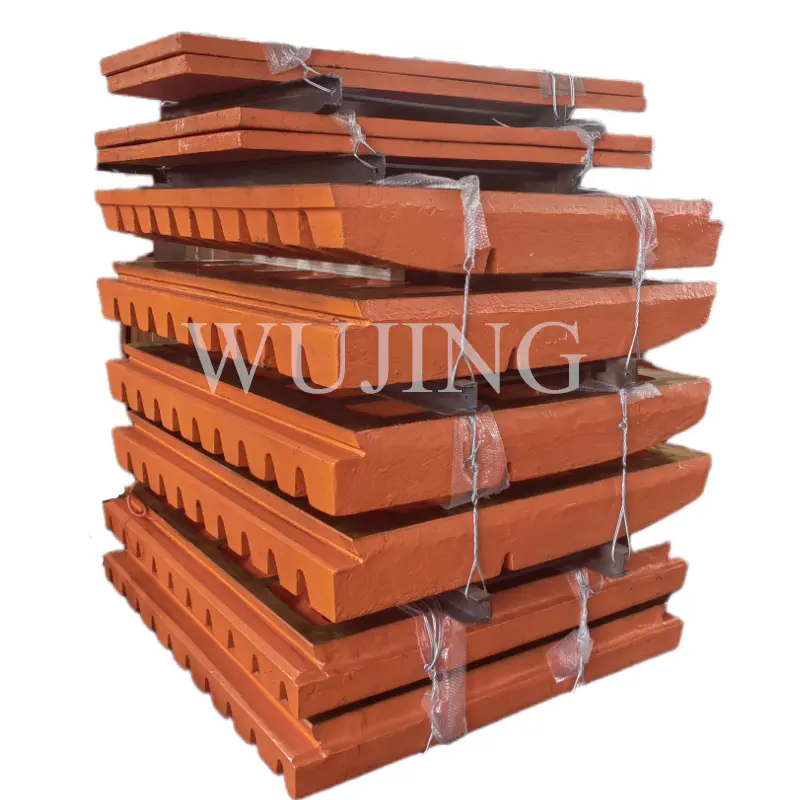
2. How to Calculate Safety Stock? A “Foolproof Formula” for You
Core Variables of the Calculation Formula
The general safety stock formula in the industry is: Safety Stock = Daily Consumption × Procurement Lead Time × Safety Factor. It looks simple, but there are many tricks to determining the value of each variable—this is the key to scientific safety stock planning.
Daily consumption should not be based on the average, but on the peak value. Your production line runs 24/7, but in summer, there is more rain, the incoming material has high humidity, crushing efficiency is low, and part wear is actually faster. We recommend taking the highest daily consumption in the past 3 months as the calculation benchmark. It’s better to prepare a little more than to run out when you need them most.
Procurement lead time is not simply “from order placement to receipt”. A customer exporting to Australia only calculated the 30 days of sea transportation as the procurement lead time, but ignored the domestic production scheduling period, Australian customs clearance time, and inland transportation. In the end, the actual delivery took 55 days. We generally recommend adding a 30% margin to the theoretical procurement lead time to cope with unforeseen events such as customs inspections and shipping delays.
How to Determine the Safety Factor?
The safety factor depends on how much you fear production shutdowns. The general value range is 1.2 to 2.5. If this production line is the only source of income for your factory and a day of shutdown means huge losses, set the safety factor to around 2.5. If you have multiple lines to dispatch or the impact of shutdowns is small, 1.2 is sufficient.
Example Illustration
A cement mine in Guizhou crushes 5,000 tons of limestone per day, with a procurement lead time of 45 days, a daily part consumption cost of 2,000 yuan, and a daily shutdown loss of 150,000 yuan. The safety stock we calculated for them is: 5,000 × 45 × 2.2 = 495,000 tons of spare parts value. Although it seems like a lot of stock, compared to the loss of a single shutdown, this inventory cost is negligible—this is the significance of calculating safety stock based on wear rate and shutdown risks.
3. ABC Classification Method: Don’t Treat All Parts as Treasures
Prioritize and Focus on Key Points
Many purchasers have a habit of trying to stock all parts of the crusher. This is unscientific and unnecessary. We generally use the ABC classification method for crusher parts inventory management:
Class A Parts: High value, long procurement lead time, and immediate shutdown if damaged (such as jaw plates, cone concave, impact crusher blow bars). Safety stock must be prepared for these, with a high safety factor—this is the core of wear parts stock strategy.
Class B Parts: Medium value, and production can continue temporarily if damaged (such as screens, belts, liners). Reasonable inventory can be prepared for these, but there’s no need for strict stock guarantee.
Class C Parts: Low value, easily available, and no impact on main production if damaged (such as bolts, springs, small bearings). These can be purchased on demand and should not occupy inventory space.
Real Case
A quarry in Yunnan used to “grasp everything”—the warehouse was piled with hundreds of thousands of yuan worth of small parts, but the most critical cone liner was not in stock. After we helped them reorganize, they concentrated 80% of their inventory funds on 20% of key parts, reducing the number of shutdowns from 5 times a year to 1 time. This is the power of scientific inventory management based on ABC classification.
How to Handle Parts with Long Procurement Lead Time?
For imported parts or non-standard customized parts, the procurement lead time is often more than 60 days. For such Class A parts, we recommend setting a “double insurance”: on the basis of safety stock, set an “early warning stock”. For example, when the remaining service life is 30 days, the system automatically reminds you to place an order. If there is a problem with this procurement, there is still a 30-day buffer period to avoid production shutdowns—this is a key part of avoiding production line shutdowns.
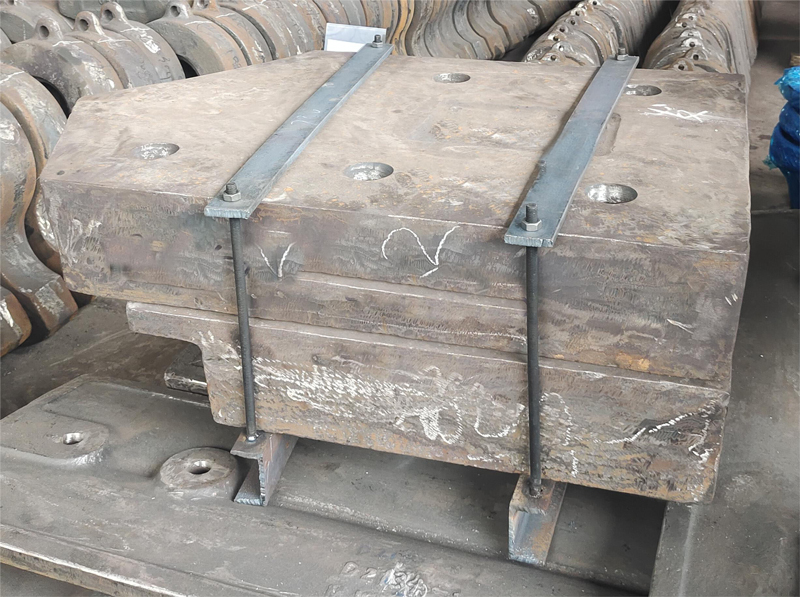
4. Data-Driven Management: Don’t Let Empiricism Hurt You
From “Feeling” to “Report” Transformation
I admire senior masters who have worked in crushing for 20 years—they can judge when parts need to be replaced by feeling. But when it comes to predicting how much stock is needed in three months, this feeling is not reliable. Because human memory is biased: people always remember the hardest times and tend to overstock, or remember the smooth times and tend to understock.
The system we built for a nickel mine in Indonesia is very simple: a monthly report recording the operating hours, processing tonnage, and wear amount of main parts for each crusher. After three months, they found that the liner wear rate of Cone No. 2 was 30% faster than that of Cone No. 1. Investigation revealed that this was caused by feed segregation. After adjusting the feeding method, the wear rate decreased, and the inventory plan was adjusted accordingly—this is the value of data-driven wear rate management.
Common User Question: What if a small factory can’t afford an ERP system?
Excel can solve the problem. The key is whether there is a special person responsible for filling in the data and whether the data is accurate. We have seen an impressive individual operator who recorded data by hand in a notebook for three years. He calculated the part replacement cycle more accurately than a computer. Tools are secondary; awareness is primary—this is a practical tip for small factories to manage crusher parts inventory.
Suppliers’ Data Can Help You
Reliable part suppliers have a large amount of wear rate data from many customers. For the same granite crushing, the wear rate can vary by 30% among customers in different regions. Every year, we send a summary of the “Common Material Wear Comparison Table” to long-term cooperative purchasers, allowing them to adjust the inventory factor according to their own working conditions. This is much better than working behind closed doors.
5. Real Case: How a Production Line Went from “Frequent Shutdowns” to “No Shutdowns”
A construction waste disposal company in Zhejiang used to shut down at least twice a month due to part issues: once because the hammer was worn out with no stock, and once because the screen was broken and they had to wait for delivery. Each shutdown caused a loss of 70,000 to 80,000 yuan, totaling hundreds of thousands of yuan in losses a year.
We helped them do three things: First, sort out the maintenance records of the past year and count the actual service life of each part. Second, recalculate the safety stock using the peak daily consumption. Third, establish a minimum inventory early warning line for key parts—this is a complete set of actionable safety stock planning solutions.
Half a year later, the number of shutdowns dropped to two, and both were planned shutdowns—knowing in advance that parts needed to be replaced and arranging time in advance. Last year, the boss told me that although the warehouse now has an extra 100,000 yuan worth of stock, the annual savings from avoiding shutdown losses exceed 500,000 yuan. This is a cost-effective deal.
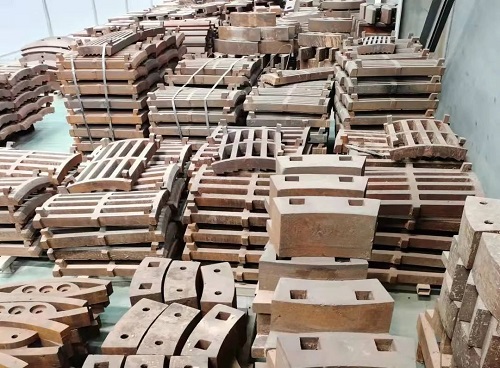
FAQ: Three High-Frequency Industry Questions
Q1: I am in export trade. How much stock should I recommend to overseas customers?
A: It depends on the customer’s situation. If it is a mine in a remote area with a long procurement lead time, it is recommended to prepare enough stock for 3 months, especially wear parts. If it is a mixing station around a city with a mature supply chain, 1-2 months of stock is sufficient. Here’s a tip: for the first cooperation, sell an extra set of spare parts to the customer and tell them “pay when you use it”. This has high customer acceptance and you don’t have to worry about capital occupation—this is a practical wear parts stock strategy for export trade.
Q2: Too much stock ties up capital, and too little stock risks shutdowns. How to find the balance?
A: Do the math: Inventory Holding Cost (capital interest, warehousing fees) vs. Stockout Cost (shutdown losses, emergency procurement premium). According to general industry experience, stockout cost is much higher than inventory cost. So it’s not a mistake to be conservative. Once you have accumulated enough data, you can gradually optimize the inventory factor—this is the key to balancing crusher parts inventory and cost.
Q3: How to set safety stock for seasonal production enterprises?
A: Increase the safety stock factor to the highest before the peak season; appropriately reduce inventory during the off-season. For example, quarries in northern China shut down in winter, so prepare enough wear parts before winter to use directly in spring. In summer, when output is low due to rainy seasons, you can appropriately consume inventory and reduce stock—this is a seasonal adjustment method for safety stock planning.
Meta Description
How to manage crusher parts inventory? Planning safety stock based on part wear rate is the key to avoiding production shutdowns. This article provides a actionable inventory management plan from wear data statistics, safety stock calculation formula, ABC classification method to real cases, suitable for quarries, mines, cement plants and B2B purchasers. Click to read and reduce shutdown risks.
Core Keywords
crusher parts inventory, part wear rate, safety stock planning, avoid production line shutdowns, wear parts stock strategy
Post time: Mar-13-2026