
Couplings and Pulley Systems: The “Bridge” Transmitting Power Between Motors and Crushers
Just installed a new motor, yet output hasn’t increased? The crusher suddenly makes strange noises during operation, but the belt and bearings seem fine? These seemingly complex issues often stem from an overlooked root cause—the core “bridge” of power transmission: couplings and pulley systems. They serve as the pivotal connection between the motor and the crusher’s main shaft, directly determining power efficiency, equipment lifespan, and production stability. Improper selection means even the most powerful motor becomes “powerless to deliver.” This article thoroughly dissects these two core components—from operating principles to practical selection—empowering you to build an efficient, reliable, and cost-effective power transmission system.
I. Couplings: The Art of Rigid Connection—Why Misalignment is Their Achilles’ Heel?
Imagine attempting to connect two slightly misaligned shafts with a rigid iron pipe—the result would inevitably be violent vibration and rapid wear. The coupling serves as this “connecting pipe” between the motor and the crusher’s main shaft, with its core task being to smoothly transmit massive torque while accommodating certain installation errors.
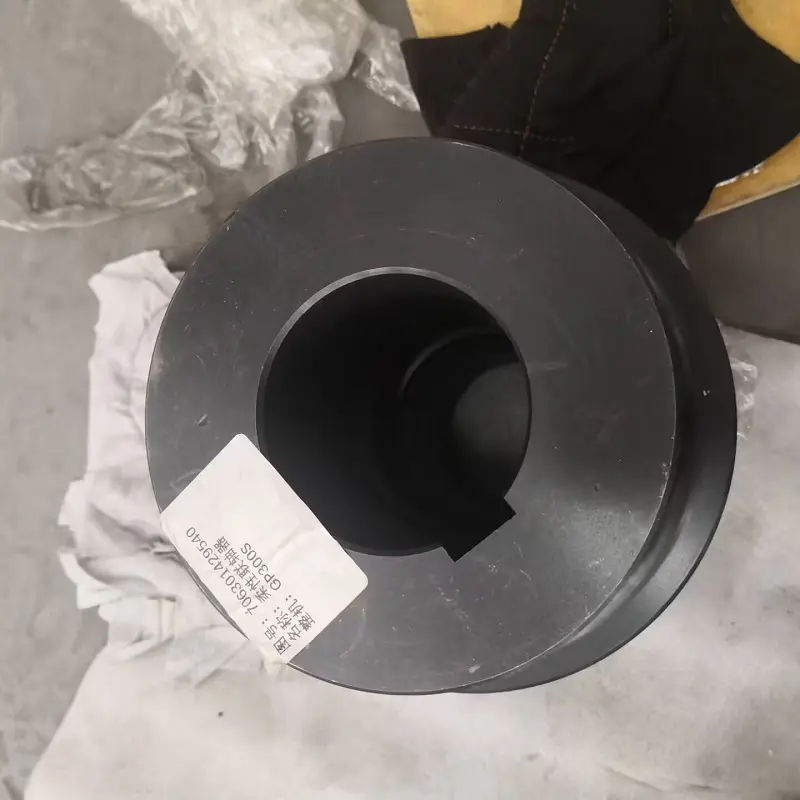
Preferred Solution: Flexible Pin Coupling. In the crushing industry, flexible pin couplings dominate due to their high cost-effectiveness and reliable cushioning performance. Their structure incorporates a set of nylon pins with rubber bushings between two coupling halves. These nylon pins not only transmit torque but, more crucially, compensate for radial misalignment of 0.5-3mm between the motor and crusher shaft through their own slight deformation, while simultaneously absorbing impact loads.
Common Misconceptions: Many users mistakenly believe that a coupling only needs to be “strong enough,” overlooking the distinction between ‘rigidity’ and “flexibility.” For instance, forcing a connection with a rigid flange coupling—especially when alignment precision is insufficient (which is extremely difficult to maintain under heavy-load, long-term industrial conditions)—can generate additional stresses that directly impact the motor and crusher bearings. This leads to abnormal bearing overheating and premature failure. A granite crushing production line experienced this issue, burning out the front bearings of two motors within six months. The problem was completely resolved after replacing the coupling with an elastic coupling and ensuring proper installation.
Core Recommendations: When selecting a coupling, prioritize its rated torque and permissible compensation capacity. The rated torque of the chosen model should be at least 1.5–2 times the motor’s rated torque, providing ample safety margin against transient overloads caused by the crusher’s frequent starts/stops and material jams.
II. Pulley: The Speed Ratio and Tension Balancer—How to Save Energy and Ensure Durability?
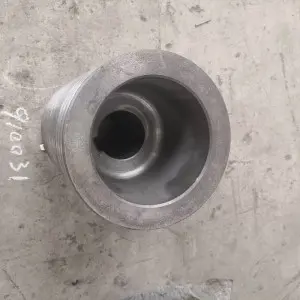
If couplings represent “rigid connections,” pulley drives exemplify “flexible connections.” They do not directly transmit vibration but adjust crusher speed by altering the diameter ratio (speed ratio) between the drive and driven pulleys, serving as the key to flexible speed control and secondary shock absorption.
The critical factors are speed ratio and groove type. The diameter ratio between the drive pulley (motor end) and driven pulley (crusher end) directly determines the final rotational speed and torque. For example, if the motor runs at 1450 rpm and the crusher shaft requires 650 rpm, the speed ratio is approximately 2.23. A more specialized consideration is the belt groove type: A-type, B-type, C-type, etc. The difference lies not only in dimensions but also in effective contact area and friction force. Pairing a 22kW motor with a B-type groove instead of an A-type groove prevents belt slippage and lost revolutions, boosting transmission efficiency by over 5%.
Real-world case: A scrap metal recycling plant in Jiangsu Province experienced high operating currents and rapid belt wear on its scrap steel crushing line. Inspection revealed an oversized pulley speed ratio design, causing the crusher to operate under prolonged overload (“small horse pulling a big cart”) with excessively high belt tension. After recalculating the load, adjusting the speed ratio from 2.5 to 2.1, and replacing the pulleys with SPB wide-groove pulleys, the motor operating current decreased by approximately 15%. This resulted in significant monthly electricity cost savings and doubled belt lifespan.
User Question: Why must multiple belts be replaced as a complete set during multi-belt drives?
This is because slight length variations between new and old belts cause uneven stress distribution. New belts bear most of the load and may break prematurely. Always use a professional belt tension gauge to ensure consistent tension across all belts.
III. Practical Selection Guide: Matching Your Crusher to Operating Conditions
Theory must ultimately be applied in practice. Selecting the right components requires systematic consideration of equipment parameters and operating environment.
Step 1: Identify Core Parameters. Consult the equipment manual or nameplate to confirm three critical data points: motor power (kW), rated speed (rpm), and required operating speed of the crusher (rpm). This forms the foundation for all calculations.
Step 2: Coupling Selection Checklist.
Shaft Bore Type: Cylindrical bore (Y-type) or tapered bore (J-type)? Must match the motor/crusher main shaft end.
Bore Diameter & Keyway: Precisely measure the shaft diameter (e.g., Φ65mm) and provide keyway width, height, and tolerance (e.g., 18*11h9). Deviations exceeding 0.1mm may cause installation difficulties or looseness.
Service Factor: For high-impact equipment like impact crushers or hammer crushers, select a model one grade higher than the average operating condition.
Step 3: Pulley Selection and Drive Design.
Calculate Theoretical Speed Ratio: Motor Speed / Required Crusher Speed.
Determine Center Distance: Measure and confirm the motor slide rail’s adjustable range, which dictates the usable belt length.
Consult standard manuals: Based on calculated pulley diameter, speed, and power, select the correct belt type and groove profile according to national standards (e.g., GB/T 11356).
Environmental adaptation: In high-dust environments (e.g., cement plants, mines), consider dust-proof covers or full enclosures to prevent dust ingress and accelerated wear.
A Lesson Learned: At a quarry, when replacing the pulley for a jaw crusher, only the outer diameter was considered, neglecting the groove angle (should be 34°, but the purchased pulley was 38°). This caused the belt to fail to seat properly in the groove, leading to accelerated side wear and failure within a month. This minor angle discrepancy resulted in thousands of yuan in unplanned downtime losses.
IV. Installation, Maintenance, and Troubleshooting: Safeguarding the Long-Term Health of the “Bridge”
Precise installation and regular maintenance form the cornerstone for ensuring this system’s decade-long service life.
Golden Rule for Coupling Alignment: Fine-tune using a dial indicator in two steps: radial deviation (vertical and horizontal) and angular deviation (end face clearance). For heavy-duty crushers, the three-dial method (two radial gauges, one axial gauge) is recommended for cold-state alignment, accounting for thermal expansion displacement caused by temperature rise and stress during operation. Post-installation, separate gauge checks ensure overall deviation does not exceed 0.05mm.
Belt Drive Installation: The Critical “Tension” Factor. Insufficient tension causes slippage; excessive tension damages bearings. The most practical method is the “midpoint deflection test”: Apply a specified force (e.g., 10N) to the belt at the midpoint between pulleys. The resulting deflection should be between 1% and 1.5% of the center distance. Re-check and fine-tune every 50-100 operating hours.
Common Fault Quick Reference Table:
Symptom: Abnormal vibration and noise, coupled area overheating.
Possible Causes: Misalignment, loose anchor bolts, worn elastic elements.
Countermeasures: Shut down, realign and tighten bolts, replace pins/washers.
Symptom: Frequent belt breakage or abnormal wear.
Possible Causes: Mismatched pulley groove profiles, pulley misalignment, improper tension, oily environment.
Countermeasures: Inspect groove wear (using groove gauge), correct pulley alignment, clean and adjust.
Symptom: Motor current normal but crusher lacks power.
Possible causes: Severe belt slippage, coupling pin breakage.
Countermeasures: Check and adjust belt tension, replace damaged coupling components.
FAQ: Industry Frequently Asked Questions
Q1: When replacing couplings or pulleys, must they be purchased from the original equipment manufacturer?
Not necessarily. Professional spare parts suppliers can provide matching or even superior alternative products as long as you provide accurate model numbers, shaft bore dimensions, keyway parameters, and operating conditions. These alternatives typically offer more competitive pricing and flexible delivery. The key is to select a supplier with technical support and quality assurance.
Q2: How do I determine if a pulley groove is worn and needs replacement?
Use a standard “pulley groove gauge” to check the groove. If the groove walls have worn into irregular shapes or show noticeable shiny (polished) pits, severe wear is present. Worn grooves act like blunt knives, continuously cutting the belt sides and must be replaced promptly.
Q3: What should the preventive maintenance cycle be?
Establish a simple logbook. Conduct daily inspections for abnormal noise and vibration. Monthly checks should include coupling bolt torque, elastomer condition, belt tension, and wear. Every six months to a year, perform a comprehensive alignment accuracy review and groove cleaning inspection. In regions with significant seasonal temperature variations, adjust belt tension specifically during seasonal transitions.
Conclusion
The selection and management of couplings and pulleys—the power transmission “bridge”—goes far beyond simple dimensional matching. It is a systematic engineering endeavor integrating mechanical principles, operational analysis, and meticulous maintenance. Proper selection and diligent upkeep not only ensure stable, efficient operation of crushing production lines but also directly translate into significant economic benefits by reducing unplanned downtime, lowering energy consumption, and minimizing wear and tear. Remember: Every precise investment in foundational components is a solid investment in the reliability and longevity of the entire crushing system.
Meta Description: In-depth analysis of the core power transmission elements in crushers—a practical guide to selecting, installing, and maintaining couplings and pulleys. Solve pain points like misalignment, belt slippage and breakage, and abnormal power consumption to enhance equipment stability and efficiency. Get expert advice now to optimize your crushing production line.
Keywords: crusher coupling selection, pulley speed ratio calculation, flexible pin coupling, belt drive installation maintenance, power transmission alignment
Post time: Jan-13-2026