
Balancing Hardness and Toughness in Tapered Liners: The Art of Material Selection
Achieving the right balance between hardness and toughness in tapered liners is a core challenge in selecting crusher components. Many mines and aggregate plants face this dilemma: opting for high-hardness liners often leads to frequent breakage and downtime; while opting for highly tough liners results in accelerated wear, necessitating frequent replacements that inflate costs. After reading this article, you will gain a thorough understanding of the logic behind balancing hardness and toughness in cone liners, master material selection techniques for different operating conditions, and learn key pitfalls to avoid in cross-border procurement. Next, we will dissect the core principles of material selection from dimensions including balancing principles, material properties, and operational condition adaptation.
I. Why is the balance between hardness and toughness a core requirement for conical liners?
Conical liners are the core wear parts of crushers, directly承受ing the impact and grinding forces of materials.
Hardness determines wear resistance, while toughness determines impact resistance—both are indispensable.
Industry Data: According to a 2024 survey by the Mining Machinery Association, 75% of cone liner failures stem from an imbalance between hardness and toughness. Specifically, insufficient hardness causes excessive wear in 42% of cases, while inadequate toughness leads to fractures in 33% of instances.
Real-world case: A gold mine in Africa initially used high-hardness, high-chromium cast iron for cone liners. When crushing granite, the liners fractured three times within three days, each shutdown costing over 80,000 yuan. After adjusting the material formulation to balance hardness and toughness, liner lifespan extended to 45 days, with shutdowns reduced by 90%.
Common User Question: Do harder cone liners automatically last longer?
The answer is no. Pursuing high hardness alone significantly reduces liner toughness.
When impacted by high-hardness materials, cracks or fractures easily occur, actually shortening service life.
II. Three Mainstream Materials: How to Match Different Crushing Conditions?
Three primary materials dominate the market for cone liners: high-manganese steel, high-chromium cast iron, and composite materials.
These materials exhibit distinct hardness and toughness characteristics, each suited to different operating conditions. Selecting the right material is key to reducing costs and enhancing efficiency.
High-Manganese Steel: Exceptional toughness with work-hardening properties upon impact.
Ideal for crushing high-hardness, high-impact materials like granite and basalt.
High-Chromium Cast Iron: High hardness and superior wear resistance, but lower toughness.
Suitable for crushing medium-to-low hardness, highly abrasive materials like limestone and marble.
Composite Materials: Utilizing dual-metal composite technology, featuring a high-hardness wear-resistant surface layer and a high-toughness impact-resistant inner layer.
Suitable for complex conditions like mixed material crushing or intermittent high-impact operations.
Real-world case: A Southeast Asian sand and gravel plant conducted condition-specific testing. When crushing granite (high hardness), high-manganese steel liners lasted 52 days—significantly longer than the 18 days achieved by high-chromium cast iron. When crushing limestone (medium-low hardness), the high-chromium cast iron liner lasted 68 days, outperforming the 45 days of the high-manganese steel liner.
Common User Question: For crushing mixed materials, which material is more suitable for conical liners?
Prioritize composite materials. They combine the advantages of surface wear resistance and inner layer impact resistance.
They can handle the impact and grinding of components with varying hardness in mixed materials, offering superior adaptability.
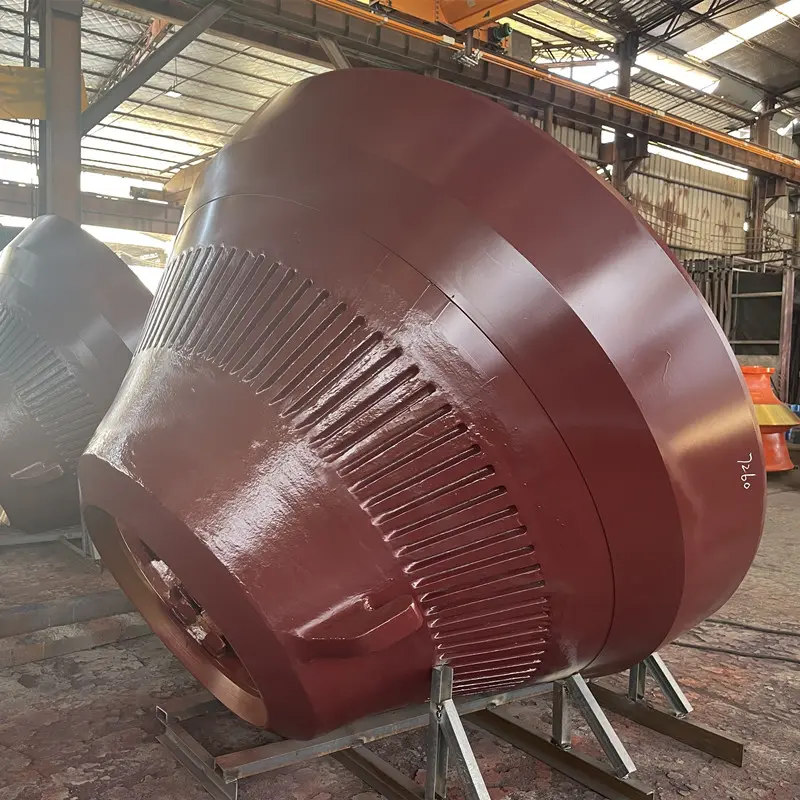
III. Cross-Border Procurement of Cone Liners: How to Avoid Pitfalls in Material Selection?
For cross-border buyers, the material quality of cone liners directly impacts customer repurchase rates.
Many buyers overlook material details, leading to product stagnation or post-sale disputes.
Three core pitfall avoidance points: First, material testing—require suppliers to provide material composition reports to ensure compliance with standards. Second, process verification—prioritize sand casting + heat treatment processes, which are more suitable for heavy-duty crushing scenarios than precision casting. Third, compliance certification—exports to Europe and America require CE and ISO 9001 certification, while exports to Australia require AS/NZS standards.
Real-world case: A Zhejiang-based cross-border buyer purchased low-cost cone liners from a supplier claiming high-manganese steel composition, but the actual manganese content fell short. After shipping to Africa, customers experienced severe wear within 10 days of use, along with liner deformation, forcing a full refund and losses exceeding $150,000. After switching to products from a reputable manufacturer—requiring material test reports and ISO certification—sales in the African market increased by 60%.
Common User Question: How can one quickly determine if tapered insert material meets standards?
Simple hardness testing can be used:
- Use a Rockwell hardness tester; high-manganese steel should have a hardness between HRC 20-25.
High-chromium cast iron should measure HRC 58-62; deviations exceeding ±2 indicate substandard material.
IV. How to Extend Cone Liner Lifespan? Key Factors Beyond Material Selection
Many users observe varying liner lifespans even with optimal materials.
This discrepancy stems from installation methods and operational practices. Attention to these details significantly extends service life.
Industry Data: According to crusher operation and maintenance surveys, properly installed and maintained cone liners can achieve over 30% longer service life; improper operation can reduce lifespan to 50% of normal levels.
Core Technique: During installation, ensure the liner fits tightly against the cone to avoid excessive gaps.
During operation:
- Control feed particle size to prevent oversized material from entering the crusher;
Regularly inspect liner wear and promptly adjust if localized excessive wear occurs.
Real-world case: At a major domestic mine, a 2mm gap between the liner and cone during installation caused uneven stress distribution, resulting in a service life of only 35 days. After adjusting the installation process to ensure gap-free contact, the liner lifespan increased to 48 days, saving 200,000 yuan annually in spare parts costs.
Common User Question: Can liners with localized excessive wear continue to be used?
Continued use is not recommended. Localized excessive wear causes uneven stress distribution.
This may lead to liner fracture or even damage to the crusher main shaft, resulting in greater losses.
FAQ: Frequently Asked Questions on Cone Liner Material Selection
Q1: Which material should be selected for tapered liners in low-temperature environments?
A1: High-manganese steel is the preferred choice. Its low-temperature toughness outperforms high-chromium cast iron, maintaining good impact resistance and fracture resistance even below -20°C. Low-temperature aging treatment is recommended prior to use.
Q2: What is the cost ranking for tapered insert materials?
A2: From highest to lowest: Composite materials > High-chromium cast iron > High-manganese steel. However, procurement cost alone is not the sole consideration.
Though composite materials have a higher purchase price, their extended service life results in lower overall operating costs.
Q3: What additional standards must tapered inserts meet for export to South American markets?
A3: Beyond the fundamental ISO 9001 certification, compliance with South America’s INMETRO certification is required.
Ensure heavy metal content in materials meets local environmental regulations to prevent customs detention.
From balancing hardness and toughness to matching materials with specific operating conditions, and from avoiding pitfalls in cross-border procurement to extending service life—the core of cone liner material selection lies in precisely matching actual requirements. Selecting materials that combine appropriate hardness and toughness not only enhances crushing efficiency but also reduces operating costs. This is the artistic core of cone liner material selection—achieving the optimal balance between hardness and toughness.
Meta Description: Achieving the right balance of hardness and toughness is key to selecting cone liner materials. This article analyzes the characteristics and operational suitability of three mainstream materials, featuring real mining case studies, cross-border procurement pitfalls, and lifespan extension techniques to help you make precise selections that reduce costs and boost efficiency. Cross-border buyers and B2B clients, click to get customized selection solutions and seize opportunities in the global mining machinery parts market.
Core Keywords: Hardness-toughness balance in tapered liners, cross-border procurement of tapered liners, mining-grade tapered liner materials, high-chromium cast iron tapered liners, composite material tapered liners
Post time: Dec-31-2025