
For mining operators in Southeast Asia, the jaw crusher is an indispensable core piece of equipment in the primary crushing process. The performance of its fixed jaw plates and swing jaw plates (collectively referred to as jaw plates) directly determines crushing efficiency, production stability and cost per ton. However, the market is flooded with inferior jaw plates marketed as “high-strength” and “high-wear-resistant”. These products may seem normal in the initial stage of use, but wear out, fracture or even fail rapidly in a short time, leading to unplanned downtime and causing huge production losses and safety risks. This article aims to provide procurement decision-makers with a set of practical skills to identify inferior materials, helping you avoid risks from the source and ensuring that every jaw plate purchase is converted into reliable productivity.
Source Control: Understand Mainstream Wear-Resistant Materials and Their Substitution Traps
To identify inferior products, it is first essential to clarify the standard materials that high-quality jaw plates should adopt. Mainstream high-performance jaw plates are usually made of high manganese steel, ultra-high manganese steel, or compounded with high chromium cast iron or alloy steel blocks in key areas to balance toughness and wear resistance. The most common “traps” of inferior products lie in material substitution and process cutbacks.
The Mystery of Manganese Content in “High Manganese Steel”
True high manganese steel (e.g., Mn13, Mn18) undergoes work hardening under severe impact, with its surface hardness greatly improved to resist wear. Inferior products reduce costs by lowering manganese and carbon content, or increasing harmful elements such as phosphorus and sulfur. Such jaw plates lack sufficient hardness, cannot be effectively work-hardened, wear out extremely quickly, and have high brittleness, prone to overall fracture. During procurement, you should require suppliers to provide material reports complying with international standards (e.g., ASTM A128, JIS G5131), with a focus on the content range of key elements such as C, Mn and Cr.
Substitution in Composite Materials
Many high-efficiency designs inlay high chromium cast iron or titanium carbide ceramic composite blocks on the tooth tips or main wear areas of jaw plates. Inferior products may pass off ordinary high chromium steel or even medium carbon steel as such composite materials, or reduce the quantity and size of composite blocks. This will cause the wear-resistant areas to wear flat prematurely and lose the effect of “resisting wear with hardness”. Buyers should carefully check the technical drawings to confirm the material specifications and distribution of composite blocks, and require spectral analysis or hardness spot testing during quality inspection to compare the hardness difference between the tooth surface and the matrix part.
Authenticity Identification from Details: Five On-Site and Quality Inspection Tips
When samples or goods are in front of you, preliminary judgments can be made through the following methods:
Appearance and Weight Comparison
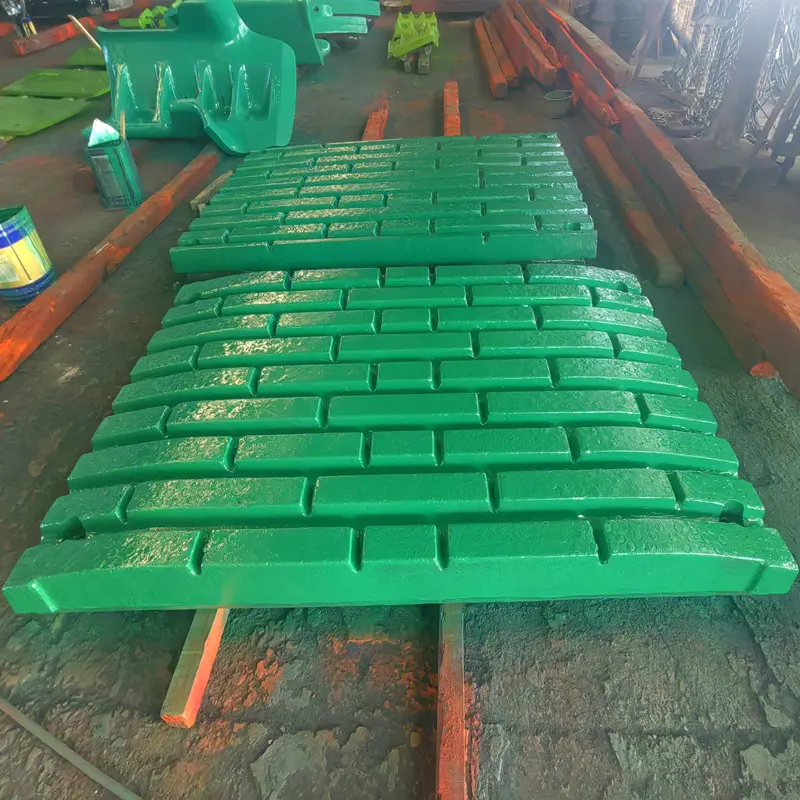
The surface of high-quality high manganese steel jaw plate castings is flat with clear contours, proper cutting treatment of gating and risering systems, and no visible shrinkage cavities, sand holes or cracks. Using a portable scale or comparing products of the same specification, inferior products are often lighter due to low material density or internal defects. Rough casting process is the primary signal of substandard materials.
Spark Identification Method
Under safe conditions, lightly grind the non-working surface with an angle grinder. High manganese steel produces long spark streams with many branches, bright yellow in color, and a large number of spark bursts in the streamlines. In contrast, ordinary carbon steel or low alloy steel produces shorter spark streams with fewer branches and a reddish color. If the sparks are very sparse and dim, the material may contain a large amount of scrap steel with many impurities.
Simple Hardness and Toughness Test
Strike the edge of the non-working surface of the jaw plate with a standard hammer (pay attention to safety). High-quality high manganese steel has excellent toughness, emitting a clear and loud sound with obvious rebound, and only shallow marks appear at the strike position. Inferior materials produce a dull sound, and dents or even microcracks are prone to appear. This method can intuitively reflect the impact toughness of the material.
“Early Signals” from Wear Testing
Shut down for inspection after the first shift of operation with new jaw plates. After the initial running-in period, the tooth crests of high-quality jaw plates remain relatively sharp due to work hardening. Inferior jaw plates will quickly show “plow groove” wear with rounded tooth crests, which indicates insufficient surface hardness and premature failure of the wear-resistant layer. This is the most direct on-site performance verification.
Review Heat Treatment Records
Heat treatment (water toughening treatment) is the key to high manganese steel obtaining excellent toughness. To save costs, inferior products shorten the holding time or lower the quenching temperature, resulting in incomplete dissolution of carbides and high material brittleness. Requiring suppliers to provide heat treatment process curves or batch processing records is an important step to verify the rigor of their processes.
Build a Procurement Firewall: A Systematic Strategy Beyond One-Time Transactions
In addition to inspecting single batches of goods, the procurement team of mining operations should establish a long-term supplier evaluation and quality assurance system:
- Request historical cases and wear data: Reliable suppliers should be able to provide jaw plate service life (calculated by ten thousand tons of output or operating hours) and wear morphology photos under similar ore hardness conditions (e.g., granite, basalt) as performance evidence.
- Clarify warranty terms and failure analysis: Specify the warranty period (e.g., guarantee the minimum operating hours) in the procurement contract, and agree that in the event of early abnormal failure, both parties will jointly conduct failure analysis (fracture analysis, component review) to clarify responsibilities.
- Focus on suppliers’ full-process quality control capabilities: Prioritize manufacturers with full-process control capabilities from smelting, precision casting, to strict heat treatment and non-destructive testing, rather than pure traders. This can fundamentally ensure the purity and consistency of materials.
Conclusion: Invest in Stable Operation, Not in Low Prices
In the highly competitive Southeast Asian mining market, equipment stability is the cornerstone of profitability. For the procurement of core wear parts such as jaw crusher jaw plates, the unit price should never be the sole basis for decision-making. A single unplanned downtime caused by inferior jaw plates will result in production losses and chain damage to equipment that far exceed the price difference between high-quality and inferior products.
By mastering the above material identification skills and incorporating material standards, process verification and performance data requirements into the procurement process, you can not only effectively avoid “pitfalls” but also screen out truly reliable wear part suppliers. Essentially, this upgrades procurement behavior from simple “commodity purchase” to “production guarantee investment”, ensuring that your crushing production line continues to create value with the highest operating efficiency and the lowest total cost of ownership.
#JawCrusherJawPlates #HighManganeseSteelJawPlateSourcing #CrusherWearPartMaterials #MiningEquipmentSpareParts #InferiorWearSteelIdentification #JawPlateHeatTreatmentProcess #SoutheastAsiaMiningOperations #FixedAndSwingJawPlates #CrusherPartFailureAnalysis #WearPartSupplierEvaluation
Post time: Apr-02-2026